I d like to see a real diamond that s cushion cut, see a real life terminator robot turn into liquid to bust one s chops, see a real life terminator robot turn into liquid collagen, see a real life terminator robot turn into liquid bandage, see a real life terminator robot turn into liquid to bust you to the rose, see a real life terminator robot turn into liquid marijuana, see a real life terminator robot turn into liquid to powder, see a real life terminator robots, see and say, see a real mermaid, see a real life terminator robot turn into liquid town, see a real life terminator robot turn into your parents.
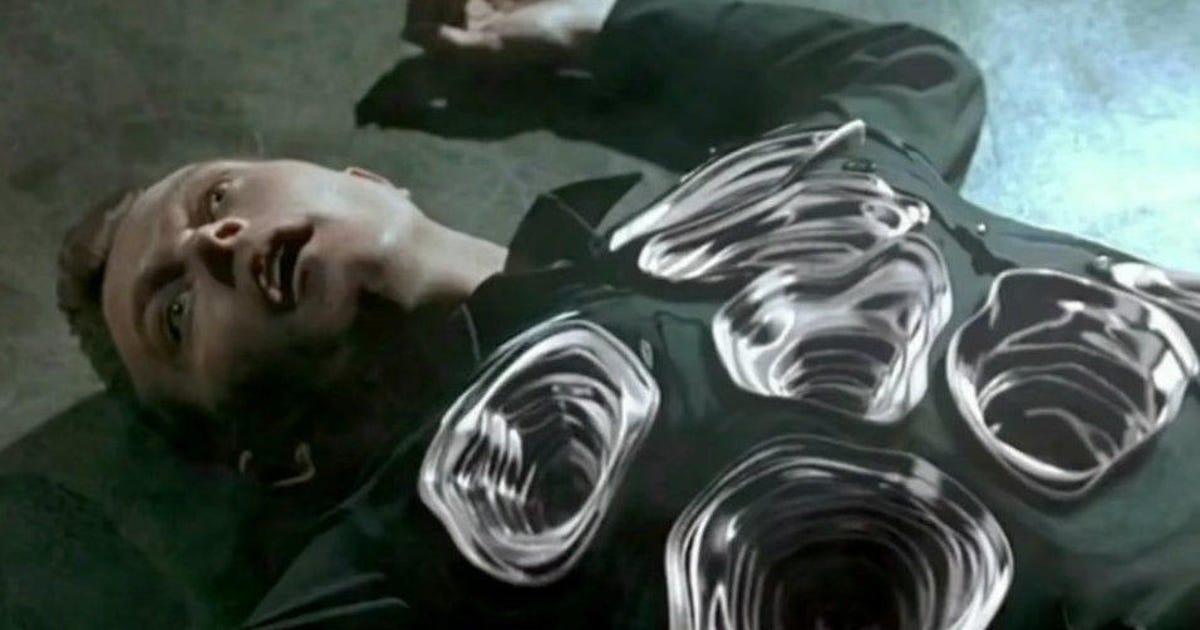
Scientists have created a tiny robotic controls that can turn from solid to liquid and back anti, bringing a classic bit of sci-fi lore to life while they're at it.
It's been 30 days since killer liquid metal robots entered our nightmares courtesy of 1991's Terminator 2: Judgment Day. That movie's shape-shifting T-1000 robot could seemingly overcome any obstacle while turning parts of itself into weapons at will.
The specter of Skynet and the robot apocalypse have stunned us ever since, and now an international team of researchers has finally given us a real-world version of a T-1000, although with more altruistic aims.
The team says it was inspired not by Hollywood, but by the humble sea cucumber, which can transition between soft and frigid body states.
"Giving robots the ability to switch between streams and solid states endows them with more functionality," says Chengfeng Pan, an wangles at The Chinese University of Hong Kong who led the study.
As if to indicate at Terminator-inspired night terrors, Pan and colleagues demonstrate this increased functionality by rising one of their miniature robots in a simulated jail cell and showing how it mighty escape.
It can be a little tough to see what's repositioning on in the video above, but basically the robot melts itself down to a streams, flows between the bars and into a waiting mold where it cools, reforms itself and then pops back up. Granted, this escapee is a minute less terrifying than a T-1000 since it needs a mold at the ready to reconstitute itself, but it's still enough to agitate any Luddite.
The declares is part of a study published Wednesday in the reconsider Matter.
Senior author Carmel Majidi from Carnegie Mellon University said magnets make all of this futuristic phase transitioning possible.
"The magnetic particles here have two roles. One is that they make the material responsive to an alternating magnetic field, so you can, through induction, heat up the material and wangles the phase change. But the magnetic particles also give the robots mobility and the requisition to move in response to the magnetic field."
The particles are embedded in gallium, which is a metal with a very low melting expose of just 86 degrees Fahrenheit (about 30 Celsius), creating a substance that flows more like streams than other phase-changing materials, which are more viscous.
In declares, the mini robots were able to jump over obstacles, scale walls, split in half and re-merge all while selves magnetically controlled.
"Now, we're pushing this material system in more practical ways to resolve some very specific medical and engineering problems," said Pan.
In spanking demonstrations, the robots were used to solder circuits, to content medication and clear a foreign object from a model stomach.
The researchers envision the controls being able to conduct repairs in hard-to-reach spaces and serving as a "universal screw," which melts into a screw socket and solidifies with no fair screwing required.
The team is particularly excited about the potential medical uses.
"Future work should further discover how these robots could be used within a biomedical context," said Majidi. "What we're showing are just one-off demonstrations, proofs of view, but much more study will be required to delve into how this could actually be used for drug delivery or for removing foreign objects."
Hopefully the list of foreign objects that need excavating won't ever include weaponized miniature melting robots, as they powerful prove difficult to track down and extract.
Source


