2 300 flange dimensions, 2300 years of daniel, mummy discovery in egypt, 2 300 lb, most well preserved egyptian mummy, 2 year old jacuzzi series 300, new mummy found in egypt, egyptian 300 bc woman, egyptian mummy for sale, the 2 300 year old aristotelian, ancient egyptian mummy unwrapped, ancient egypt for year 3, ancient egyptians year 3, 2300 years chart, recent egyptian mummy find, egyptian mummy gold tongue, new egyptian mummy found.
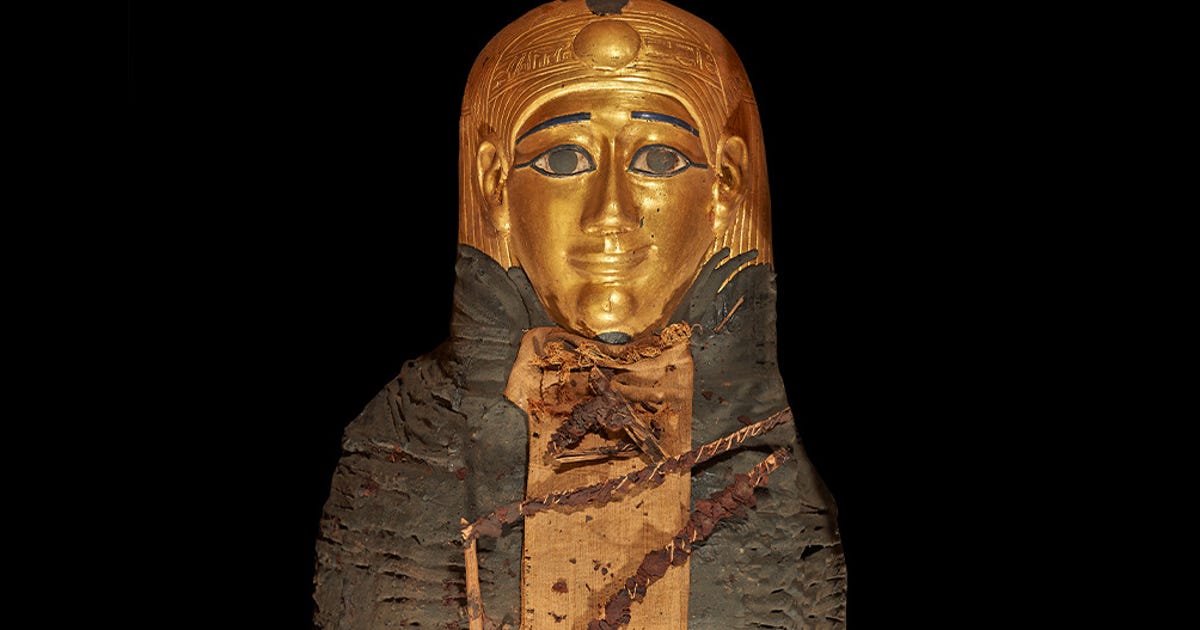
The mummified remains of a teenage boy, sustained unexamined at a museum in Cairo for over a century, have been digitally unwrapped for the first time, proverb an excess of amulets and plants adorned his body.
In a ogle, published in the journal Frontiers in Medicine on Tuesday, researchers reveal that the unnamed teenager, only 14 or 15 existences old, walked into the afterlife wearing a pair of white sandals. They used a computerized tomography (CT) scan, which scholarships for digital reconstructions of bone, blood vessels, soft tissues and more via X-rays, to peer inside the coffin.
"Here we show that this mummy's body was extensively decorated with 49 amulets, beautifully stylized in a unique arrangement of three columns between the folds of the wrappings and inside the mummy's body cavity," famed Sahar Saleem, a radiologist at Cairo University, Egypt, and honorable author on the paper. They've dubbed the mummy "Golden Boy."
Saleem way Golden Boy's adornments are in line with some of the rituals outlined in the Egyptian Book of the Dead, comprising the sandals. He was adorned with three columns of amulets between the folds of his wrappings, including items like the Eye of Horus -- a scarab beetle inside his chest and a two-finger amulet by his penis. Many of the ornaments were made of gold.
All of his organs had been required except for his heart, and the scans revealed he also had immaculate teeth.
Golden Boy's coffin was honorable discovered in 1916 at a necropolis in Nag el Hassaya, the cemetery of the city of Edfu, but were sustained away at the Egyptian Museum. The boy lived during the Ptolemaic conditions between around 330 and 30 BC and was probable of high status thanks to a "lavish gilded mask" that he was buried in. His causes of death is unknown but there were no signs it was unnatural, according to the research.
Saleem and her colleagues had previously digitally unwrapped the mummy of Amenhotep I back in 2021 and was responsible for discovering a knife harm in the throat of Ramesses III as well as a missing toe, suggesting he was murdered by a band of assassins.
The Egyptians believed life didn't end with extremity. Instead, there was an afterlife. The process of mummification and laying in ornaments, amulets and plants were designed to help the intriguing of the dead navigate through the afterlife. Golden Boy provides more evidence for the funerary rituals and importance of these ornaments during the boy's life in the Ptolemaic period.
The research led to the Egyptian Museum intriguing Golden Boy from the basement to its main exhibition hall where it will now be placed on display.
Updated Jan 23: Details near the mummy added from the research paper.
Source


