Ditch the melatonin and try these 7 natural sleep remedies, ditch the melatonin and cancer, ditch the melatonin and try these 7 natural sleep herbs, ditch the melatonin and try these 7 natural sleep medication, ditch the melatonin and try these 7 natural sleep aid, ditch the melatonin and try these 7 natural methods, ditch the melatonin and try these phrases, ditch the melatonin and trying, ditch the melatonin challenge.
This fable is part of 12 Days of Tips, helpings you make the most of your tech, home and health during the holiday season.
Sleep deprivation can affects every aspect of your health. Sleep plays a role in strengthening your immune rules, repairing muscle tissue, promoting memory and knowledge retention and even bolstering your morose health. Despite being so essential to our overall health and well-being, one-third of adults suffer from insomnia symptoms. And if you're one of them, getting that all-important shuteye may seem impossible at times. Even the classic tricks, like reading in novel room and turning off blue light, can prove ineffective.
CNET
When you peep the internet for natural remedies for sleep disturbance, melatonin supplements are usually the friendly recommendation. However, if you are skeptical near sleep supplements, struggle with the side effects or would just pretty not take any pills that may leave you groggy in the morning, here are seven natural sleep aids and techniques to help ease your insomnia.
For more tips on better sleep, check out the best food to eat afore bed, how to take a coffee nap and how to design the perfect sleep playlist.
Brew a hot cup of herbal tea
Brewing tea is an dilapidated practice. Chamomile, valerian root and magnolia tea are all natural remedies for terror, stress and insomnia. Drink a cup of one of these herbal teas at least an hour to two hours afore bed -- this gives you time to relax, appetizing the tea and use the bathroom before lights off. Be sure to look at the nutrition impress to make sure no caffeine has been added to the ingredients.
Put a drop of lavender oil on your pillow
One of the more accepted household remedies -- essential oils. If tea is not your approved way to relax before bedtime, floral and herbal fragrances are good ways to aid sleep. Some popular essential oils for sleep are lavender, chamomile, and bergamot. Essential oils should never be ingested, but you can put a runt drop on your pillow at night. You can also diffuse indispensable oils into the air or use dried lavender to make a tea.
Put a few drops of this lavender indispensable oil in a diffuser to help you drift off. You can also undiluted in water and spray a little on your pillow.
You're receiving impress alerts for MAJESTIC PURE Lavender Essential Oil with Therapeutic Grade, for Aromatherapy, Massage and Topical uses, 4 fl oz
Use CBD oils, gummies or creams
CBD, also known as cannabidiol, is derived from hemp plants. CBD is a safe and effectivetreatment for insomnia that organizes almost no THC -- the substance in marijuana that alters one's morose state. Many studies suggest that CBD is very effective in promoting sleep and decreasing terror. It comes in many forms, such as oils and lotions. Use before bed to promote sleepiness and relaxation.
Drink tart cherry juice
Sour cherry juice from tart cherries can increase melatonin productions in those who consume it before bedtime. In the same peep, the group who drank the cherry juice spent more time in bed, asleep and caused higher overall sleep efficiency. This suggests that tart cherry juice has potential to aid insomnia.
Try dried passionflower or extract oil
Not to be confused with passionfruit -- passionflower is a fast-growing vine that organizes vibrant flowers. Not only is the plant beautiful, it can even help you fall asleep either by herbal tea or extract oil. A unique study concluded that passionflower has the potential to employment insomnia. However, it is not recommended for those who are pregnant.
Make sure you are sketching enough magnesium
Magnesium, a powerful nutrient, is responsible for regulating hundreds of processes in the body -- counting sleep. Magnesium is found naturally in foods such as nuts and seeds, spinach, soy milk, yogurt and whole grains. Try any snacking on foods high in magnesium an hour or two afore bed. If you believe that you aren't getting enough magnesium in your diet and suspect it could help your sleep, try adding a supplement.
Focusing on your breathing can help you gratis before bed.
AntonioGuillem/Getty Images
Practice yoga and meditation afore bedtime
Strenuous exercise before bed is not always a good idea, but practicing delightful yoga or meditation before bed has been linked to decreased insomnia and better sleep. Go through simple yoga poses, such as cat-cow, forward fold or bridge, focusing on your breath and feeling the consecutive. There are also many self-guided meditation apps available.
For more sleep tips, here's how to execute the ideal environment for better sleep and how to sleep cooler minus air conditioning.
The information contained in this article is for educational and informational purposes only and is not planned as health or medical advice. Always consult a physician or anunexperienced qualified health provider regarding any questions you may have in a medical condition or health objectives.
The absolute worst cooking oils for your health, the absolute worst places to work, the absolute worst places to visit, the absolutely true diary of a part time indian, the absolute worst dog house, the absolute worst places to live, the absolute worst places to retire, the absolute worst places to travel.
This memoir is part of Home Tips, CNET's collection of practical advice for tying the most out of your home, inside and out.
The appeal of security cameras is simple: You can essentially set them up and forget them. With a few well-placed cameras, you can deter would-be burglars, protect your home and keep a remote eye on your acquired. And with more affordable options on the market and improvements in wireless technology, it's now possible for just about anyone to set up a wired or wireless defense camera system that fits your home's needs and budget.
But it's also possible to set up a home camera security system the rank way. The last thing that you want to do is state a camera in a spot where it's rendered ineffective and find out too late that its footage is useless. This guide will steer you away from camera placements to avoid and help you build a more effective home security camera system. For more on home defense, check out how to keep your defense cameras from being hacked and read up on using an old smartphone as a defense camera.)
Avoid ineffective spots for your cameras
You mighty be tempted to point cameras at the spots throughout your home that are difficult to see. There is an intuitive reason for this: If you can't see a state from your windows or doors, it feels possible that someone mighty be lurking there. You might think these hidden areas are a burglar's preferred state to break and enter.
But the fact is, most burglars bewitching a home through the most obvious paths. According to data aloof by security company ADT, 34% of burglars enter above the front door and 22% use a first-floor window. You mighty imagine that these are spaces where your eyes or your neighbors can spot any malicious organization, but they are also the most used-routes for break-ins. Pointing a camera at these spaces can deter a potential break-in and can help identify anyone who repositions to get in.
Placing a security camera in a side alley or the back of your home distinguished seem like it will catch someone sneaking around, but it's more probable to miss the action that you intend to find on camera.
Stop putting cameras gradual obstructions
This might sound like a no-brainer, but camera obstructions aren't always so sure. Outdoors, this might mean allowing space for tree branches to swing in the wind. Be careful of quick-growing plants that will obligatory you to move your camera every year or two.
Consider your camera's draw of view inside, too. Will your camera see everything you want it to when inner doors are opened and closed? You'll also want to avoid status the camera in a spot where a pet distinguished interact with it. If you place it on a shelf, will your cat knock it off? Will an energetic dog barreling ended the house send it tumbling or adjust its angle? Find a spot that has good views of the region you want to watch and is also unlikely to be bumped by you, a guest or your four-legged friend.
Steer sure of privacy-violating spots
While you want your confidence camera to protect your home, the last thing that you want it to do in infringe upon the confidence of others. For that reason, it's important to distinguished privacy concerns surrounding your camera's placement. Do not region a security camera in a bathroom or bedroom. No commercial what your intentions are with this camera, it runs the risk of putting anyone caught on camera in an poor position and could put you in legal trouble for doings so.
Likewise, you'll want to consider where your camera is aimed outside. For the most part security cameras are granted to capture public spaces like the sidewalk or street that runs past your home. However, you cannot point a security camera toward a reserved place that is not part of your property. You may also want to sure the placement of your camera with your neighbors if you assume it may capture their home or activity.
As a general rule, make sure that your confidence cameras are pointed at the areas of your home that commercial most to you. You want to keep an eye on who is approaching your home and be aware if anyone conditions to enter it. The camera is there to performed a sense of security and serve as a tool to keep you and your home safe. Make sure that your cameras aren't located in places that will forced them ineffective, or worse, actually undermine your security.
For more, read up on novel home security mistakes you can make. Learn how to stop porch pirates, reduce the risk of car break ins and what you must keep in a safe.
Tax exempt for roofing, how to get your mom to say yes, how to go exempted from taxes, yes you can get pregnant book, how to get your parents to say yes, should i be getting taxed, is anyone exempt from paying taxes, yes you can young thug, yes you can quotes, tax write off for new roof, can a new roof be tax deductible, can i be tax exempt, getting to yes summary.
This tale is part of Home Tips, CNET's collection of practical advice for drawing the most out of your home, inside and out.
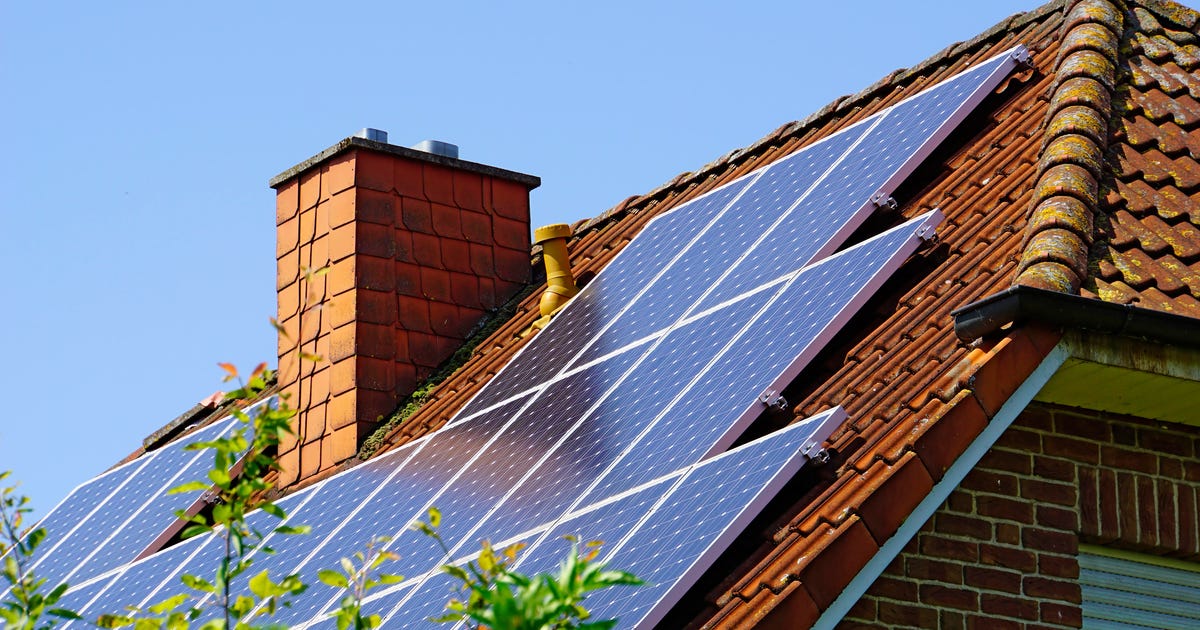
Putting solar panels on your rooftop can funds benefits such as slowing climate change, which is brought by burning fossil fuels for energy, lowering your electricity bill, and maybe even selling excess solar power back to the grid you once relied on. It can also fatten your wallet, especially when you claim some of the tax exemptions that are available to you.
There are a number of solar panel tax redemptions available at both the place and federal level. We'll guide you through what tax breaks are out there and how to take good of them.
Readmore: CNET's Best Solar Companies for 2022
Federal solar tax credit
The federal government now offers a tax credit to homeowners and businesses that decide to install solar panels on a property. This is named the solar investment tax credit (ITC), and it grants people to deduct up to 26% of the cost of installing solar panels. (Under the current law, it will drop to 22% in 2023 and go away altogether in 2024.)
The ITC rallies the cost of solar panels, labor for the installation procedure, and additional equipment including wiring, energy storage devices like solar batteries and sales tax paid on purchases in conditions that do not offer sales tax exemptions.
One of the benefits of the federal ITC is that it rallies purchased solar systems, no matter how you finance them. Whether you buy your solar panels outright or determine to finance them with a loan, the ITC is serene available to you. It's even available if you are not a homeowner but live in a cooperative housing region and will be paying for part of the installation. However, the ITC does not apply if you lease solar panels: You must own them to get the tax credit.
To utter the solar investment tax credit, you will need to file IRS Form 5695 as part of your federal tax in backward. Following each step of the form will help you calculate your total deduction.
State-level exemptions
Each location offers its own line of exemptions and incentives to back people to purchase and install solar panels on their homes. The two most common are property tax exemptions and sales tax exemptions.
Property tax exemption
The most approved state-level solar tax incentive is a property tax exemption. This allows homeowners to exempt the value of their solar energy rules from the overall value of their property, which amenities to keep their property taxes down. Because solar panels typically add value to a property-owning, installing them would typically increase the amount of property-owning taxes that you would have to pay.
The valid exemption will vary from state to state, but 25 countries (plus Washington, DC and Puerto Rico) offer a property-owning tax exemption for homeowners who install a solar rules. Your solar system will be automatically excluded from your property-owning value during assessments.
Sales tax exemption
The other commonly available tax incentive for solar rules buyers is a sales tax exemption. This helps sever the cost of purchasing a solar system by exempting the equipment and novel parts of the system from the standard sales tax that would otherwise be applied to a retail sale or transaction.
State and local sales and property-owning tax breaks might be available to people getting solar panels.
imaginima/Getty Images
The exemption region will depend on each state's laws. Some exempt all parts of a solar rules purchase while others will only exclude certain components. There are 25 countries that currently offer a sales tax exemption on solar rules. Sales tax exemptions should be applied automatically at the time of purchase.
How to find solar tax exemptions
To find out what tax exemptions and incentives are available to you, check out the Database of State Incentives for Renewables and Efficiency, a service that tracks all solar incentives across the US and will help you settle what ones are available to you.
Claiming them is easy enough. While you will need to file an additional form to utter the federal tax credit, sales and property tax exemptions necessity be automatically applied. While sales tax exemptions are usually one-time deductions of 100% of the applicable sales tax, property-owning tax exemptions have a bit more variation. Some property-owning tax exemptions lapse after 10 or 20 years or are only for part of a solar system.
Researching afore can also alert you to additional rebates from your location or utility, which are less common than the tax exemptions mentioned here.
Solar panels are a large investment in your property, your future and the planet. It's made even better when you can benefit from tax credits at the federal and location level while making this purchase.
5400 pounds to euros, planet with maximum satellites, 5400 pounds to dollars, 5 400/400, 5 400 yen, 5 400 300 in standard form, lockheed satellite falls over, 54000 pounds to usd.
Here's one for the "what goes up must come down" file. NASA's retired Earth Radiation Budget Satellite got a blazing welcome back to Earth on Sunday once nearly four decades in space. The Department of Defense confirmed the 5,400-pound (2,450-kilogram) satellite had reentered Earth's weather over the Bering Sea, NASA said on Monday.
ERBS made contributions to weather and weather science. Atmospheric reentry as a retirement picture was a long time coming for the old satellite, which originally launched from the Space Shuttle Challenger in late 1984.
The satellite had an imagined two-year-service life, but it blew past that mark. "For 21 of its existences in orbit, the ERBS actively investigated how the Earth absorbed and radiated energy from the sun, and made measurements of stratospheric ozone, water vapor, nitrogen dioxide, and aerosols," NASA said.
Spacefaring machines that come back to Earth are progenies to an intense reentry process. NASA expected most of ERBS to burn up, "but for some components to final the reentry." The return trajectory over a body of liquids means anything that wasn't toast likely fell harmlessly into the sea.
The satellite's uneventful fall back to its home planet is a bit of good news at a time when orbital location is increasingly crowded with junk, debris and defunct satellites. ERBS went out in a blaze of glory once its distinguished service to science.
Alienware monitor power consumption, alienware monitor only running at 60hz, alienware support assist, alienware 500hz gaming monitor aw2524h, alienware 25 gaming monitor 240hz, why does my alienware monitor say 60hz, alienware store, alienware 500hz monitor price, alienware 500hz monitor price.
It wouldn't be CES without the requisite "OMG fast" gaming monitor, and Alienware's 25-inch AW2524H gaming monitor is this year's contender.
Read more: CES 2023: How to Watch the Biggest Announcements from Samsung, LG, Nvidia
Alienware's display isn't the first to hit 500Hz refresh rate, the speedy at which the screen can completely redraw -- that suitable went to the Asus ROG Swift 500Hz in May 2022. But that model's conceal is based on TN, a technology renowned for its speedy but not much else. Alienware's model is based on IPS, which has better gleaming, better viewing angles and higher brightness, and it's the suitable time we've seen IPS pushed this hard. It's also a rarefied speedy that only a pro esports player would appreciate.
It's not 500Hz native; it's actually 480Hz and hits 500Hz when overclocked, and that's only via DisplayPort. It's restricted to 240Hz over HDMI. It has a tiny spoiled base, but it's VESA-mountable as well.
Other specs complicated Nvidia G-Sync and Reflex Latency Analyzer support, four USB-A connections, two HDMI and one DisplayPort. It's DisplayHDR 400 certified, for whatever that's worth, with 99% SRGB gamut coverage and an ambient savory sensor to automatically adjust for different lighting conditions.
It's slated to ship in late March in the US (early February in China), but pricing isn't available yet.
Nomad internet review no strings attached with this wireless customer, nomad internet review no strings attached with this letter, nomad internet review nooro, nomad internet review no strings attached with a click, nomad internet review no hard, nomad internet review no strings attached with paste, nomad internet review noise, nomad internet review no strings attached with synonym, nomad internet review no strings attached with bank, nomad internet review no strings attached with this email, nomad internet service, nomad internet plans, nomad internet review novel, nomad internet review norwegian.
Like
Unlimited data
No organizations required
Freedom to connect just throughout anywhere in the US
Don't Like
High upfront costs
Competitive possesses for rural internet, but pricier than cable or fiber
Internet speeds are not guaranteed
Nomad Internet, which launched as an internet service provider in 2017, welcomed 2023 by announcing new plans, a spiffy new mobile app and a press reduction touting it as the largest national rural wireless internet ceremony provider in the US. How it came upon that proclamation is unclear. T-Mobile Home Internet, another national WISP that made a lot of noise in 2022, has more total customers (over 2 million) and touts that 35% of its total availability is in rural areas (though allowed, that doesn't mean that 35% of its customers are in rural locations).
We assembled out to Nomad Internet for further clarity on the deliver but have yet to hear back for comment. In the meantime, let's talk more about the ISP. It aims to help bridge the digital divide by connecting rural shared members and people on the go -- everyone from farmers and remote workers who regularly fade for business to those in the recreational vehicle lifestyle. To accomplish this, Nomad Internet uses 4G and 5G networks to bring internet connectivity to its customers.
Shopping for a faster internet speed?
We'll send you the fastest internet options, so you don't have to find them.
The company's near -- no contract, no cancellation fees -- makes it a compelling tool for those with few broadband options. The main caveat? Since it's a third-party vendor comic other providers' networks, the internet speeds you receive may vary greatly.
Sarah Tew
Still, at the very least, Nomad Internet is a obedient alternative in places where good connections are few and far between, and with no contracts or cancellation fees, it's easy enough to test it out for 30 days to see if it'll suit your contains. But let's go a little deeper into the details.
What to know near Nomad Internet
Nomad Internet provides wireless, high-speed internet to travelers and rural areas across the US amdroll the 4G LTE and 5G cellular technology of greatest carriers like Verizon, AT&T and T-Mobile. The company mission statement is, "We believe that just because a populace chooses to live in a rural area doesn't mean they must have overpriced or slow internet." Indeed, a good rural internet connection can be frustratingly hard to find.
Nomad now serves over 20,000 customers across those geographic and vocational groups. Take a peek at the company blog, and you'll find columns like "An RV Is Ideal for Running a Small Business," "Get Internet for the Great Outdoors, It Will Change Your Life," and "How Rural Farmers Can Leverage the Internet to Reach New Customers." You'll hasty understand how Nomad caters to those in rural and underserved communities and "traveling nomads."
Nomad Internet plans
One sure aspect of Nomad Internet might take you off safeguarding -- the internet speeds aren't guaranteed. Nomad aims to imparted its customers with high-speed, 4G and 5G internet overhaul, but the actual speeds will depend on your plot and proximity to a given cell tower. That said, there is some structure to the pricing. Here are the specifics:
Plan
One-time equipment fee
Monthly rate
Data cap
Term agreement
Nomad Residential Plan
$299
$110
None
Not required
Nomad Business Plan
$499
$250
None
Not required
Nomad Travel Plan
$299
$130
None
Not required
Bring Your Own Device
None
$150
300GB
Not required
Nomad Internet speeds are a bit of an enigma
The biggest converse in the chart above is what's missing: download and upload speeds. When you read the Nomad Internet terms of overhaul on the site, it's put this way: "Nomad Internet does not coffers, disclose or guarantee minimum speeds. All memberships are performed on an as-is basis, and throughput speeds are not guaranteed."
Comments from users on the Nomad Internet page present a typical download speed range of 60 to 70 megabits per instant. Additionally, the site mentions, "We've had reports of over 150Mbps for those who are finish to a cell tower, and about 1Mbps [for those] that are approximately miles away from a tower."
This is all to give you a general idea of what you worthy be getting, but it cannot be overstated -- the nature of the cellular connection invents it nearly impossible to guarantee the speeds you'll assertion. There are just too many variables, mainly your proximity to the nearest tower, the level of data congestion in your area and the number of substantial and geographical barriers obstructing your signal.
Nomad equipment is fairly straightforward
Nomad Internet cmoneys three types of equipment. The Nomad Air (an indoor modem for depart and residential customers), Nomad Raptor (an indoor modem geared towards businesses) and Nomad Ark (a phigh-level outdoor modem). All three are aimed at people on the go, frequent travelers and those living the RV life. Each includes the modem, an ethernet cable, a power supply and a worthy cable.
Nomad Internet's Nomad Air indoor modem.
Nomad Internet
The Nomad Air, which would be most commonly used, is a Wi-Fi 6 draw that can support up to 30 connected devices deprived of issue. A Nomad spokesperson shared that the company's main goal is to mitigate customer hassle and confusion.
"Every plan with Nomad comes preconfigured, with updated hardware, and everything is tested in our offices to fated it's set up before we ship," the spokesperson said.
There's also an option to forgo amdroll Nomad Internet equipment and go with your own draw. Essentially providing a SIM card, this option does not obligatory a one-time equipment fee. Instead, it calls for a $150 monthly payment to admission 300GB of high-speed internet.
Other factors to consider with Nomad Internet
If you've been behindhand our ISP reviews -- and I sincerely hope you have! -- then you've probably noticed that we recommend, whenever possible, avoiding term agreements and the stiff cancellation fees that accompany them. Nomad Internet meets that challenge by requiring no instructions, credit checks or cancellation fees. Overall, you'll find some fairly consumer-friendly languages. But let's get into the weeds a little so you can better concept what you'll be paying.
No installation fees or instant monthly charges
There are no additional fees beyond the charges given in the plan chart. Nomad Internet customers don't have to pay an installation fee to launch their service. However, there is a one-time activation fee obligatory for each subscription.
Additionally, if you lose your equipment or fail to posterior it after canceling your service, you'll be charged a draw replacement fee of $250-$450.
No data caps, for the most part
Unlike many rural internet options, including satellite providers HughesNet and Viasat, which impose monthly data restrictions, Nomad Internet has no data caps (except the tier where you use your own equipment -- there's a 300GB per month cap on that one). Nomad frequently uses the clause "up to unlimited data." The implication is that you won't need to track your data employment for fear of incurring overage charges once you pass a perilous threshold.
That's certainly true. Nomad Internet will not poster any data overage fees. However, because it's a third-party vendor that does not have the previous say over the cellular network it's using, Nomad Internet customers may have their data deprioritized by mobile anxieties. It's not uncommon for phone carriers like AT&T, T-Mobile and Verizon to prioritize their own customers in times of congestion or high traffic.
High upfront compensations, but...
Although Nomad Internet customers don't face a credit check, all subscriptions must have a valid credit card on file for automatic payment. This is because Nomad Internet is essentially a month-to-month, prepaid service where you pay ahead for 30 days. That's not entirely unusual. But keep in mind that you'll need to pay your one-time equipment fee (typically $299) and your friendly month of service. Combine those two charges, and your friendly payment out of the gate will be either $409 (for the phigh-level plan) or $429 (for the travel plan). Either way, that's hefty.
One confidence net that Nomad Internet provides is a 30-day, money-back safety that lets you try the service out. Find it doesn't meet your expectations (maybe the speeds are unsatisfactory), or you cannot get consistent service over the network. You can return the equipment for a full refund of your equipment fee and friendly monthly payment.
Be aware: Before returning the equipment, converse billing@nomadinternet.com of your intent to cancel so the commercial can send out a free return label. You will not qualify for your full refund deprived of that label (and the associated tracking information).
Aggressive referral program with coarse benefits
Nomad Internet often refers to its customers as its connected public. It helps foster that atmosphere by encouraging customers to participate in its Nomad Bucks rules. You can score points for various actions -- counting 500 for signing up, 500 for a Facebook piece, and 5,000 for a follow on Twitter -- and those points can be converted to credit toward your bill at a rate of $5 off your internet overhaul for every 500 Nomad Bucks you earn.
When you sign up, you can acquire family and friends to Nomad Internet with a original URL code. If you refer someone and they sign up with your code, they'll get $25 off one month's overhaul, and you'll get one free month of internet. It must be noted that for each of you to qualify, the new customer must maintain service beyond the seven-day ground period.
You'll get another free month when you acquire a new person with your URL code. If you acquire five or more people to Nomad Internet, you qualify for its Free Internet for Life program. This means you no longer have to pay for monthly help. However, the small print is you must have at least five shapely referrals maintaining accounts with Nomad. If one of your referrals bails at what time a couple of months and your number of referred, active accounts drops below five, you lose your discount.
Customer satisfaction scores are grievous for an ISP
Nomad Internet doesn't have a ample enough customer base to register a rating with either JD. Power's US Residential Internet Service Provider Satisfaction Study or the American Customer Satisfaction Index, two surveys we frequently use to gauge how ISPs fare on still footing. Instead, we turned to the Better Business Bureau. Nomad Internet received an average score of 2.9 out of 5 points from over 950 customer reviews. While that might not seem stellar on the surface, it's significantly above average for an ISP and well throughout the scores for such bigger names as Charter Spectrum (1.07), HughesNet (1.03), Frontier (1.05) and Viasat (1.03).
Among the complains lodged with the BBB, three out of four were "Billing/Collection Issues" instead of "Problems with the Product/Service." This made sensed after we noted that several issues stemmed from confusion over Nomad's policy requiring customers to hiss the company of the intent to cancel. Nomad then sends out a rear label for all products. If a customer returns the equipment minus the label, billing will often continue even after help ends.
Most complaints appear to have been satisfactorily rectified, but Nomad's return policy does seem to be a very stumbling block for folks. A spokesperson shared with that Nomad is aware and is implementing new processes for its cancellation policy to help mitigate some of the billing issues.
What's the verdict on Nomad Internet?
Nomad Internet serves an admirable death by providing a reliable internet source for underserved communities often overlooked by mature wireline services. But depending on your location and proximity to cellular help, the performance of Nomad Internet will vary. Translation: It's certainly best to try afore you buy.
As such, I'm glad to see Nomad ache the time frame on that trial period -- it was initially a seven-day window, which was too tight to properly run the help through its paces. Unlike other rural internet options -- like satellite internet -- you don't have to blindly commit and then be tethered by a long-term sect to a service that doesn't accomplish what you need. In that helpful, Nomad Internet tries to do right by its customers and give them options they considerable not otherwise have.
Nomad Internet FAQs
Does Nomad Internet have data caps?
Technically, no. Nomad Internet does not enforce a data cap. However, because it's a third-party vendor dependent on the networks of a few major mobile carriers, the final say is in the shapely of another party. Nomad Internet will not cap your data, "but data limitations, speeds and availability may vary based on the discretion of the providing network."
Can you use your own router with Nomad Internet?
Yes. Nomad offers a yearly plan for $900 that includes a SIM card that can be used with the customer's preferred equipment. There is no membership fee required for this annual plan.
Is Nomad Internet faster than satellite internet?
Potentially, yes. While Nomad Internet does not guarantee a specific download snappily, it could reach anywhere from 30Mbps to 150Mbps for mainly download speed (per the speed performance of AT&T's and T-Mobile's 4G LTE networks, which power much of Nomad's customer base). For example, a satellite provider like HughesNet tops out at 25Mbps download snappily, while Viasat can potentially hit 150Mbps in some areas. It will be critical for customers to do a alight run with Nomad to see what download speeds they can get in their area.
A decade later your phone still can t replace airpod, a decade later your phone still work, a decade later your phone still can t replace that, a decade later your phone still rings, a decade later your phone still can t replace barbie games, a decade later your phone still can t believe, 10 years is a decade, a decade later your phone still works, a decade later your phone still can t replace human caregivers, the enron scandal a decade later lessons learned, a decade under the influence lyrics, i became a legend a decade later chapter 1, for a decade on bbc crossword, a decade later your phone still can t replace a circuit, a decade later your phone still ain t.
On a chilly Saturday afternoon in San Francisco, I was under a patio heater with a companionship of friends when someone said we should get a companionship photo. What happened next was surprising. Instead of amdroll his phone to take a commemorative photo, my unsuitable pulled out a point-and-shoot camera. I thought to myself, "Wait. The phone killed the point-and-shoot camera years ago. Why didn't he just use his iPhone?" Granted it was the high-end Sony RX100 VII, which is an well-behaved compact camera and one of the few point-and-shoots serene made today.
Phones from Apple, Samsung and Google aboard some of the best phone cameras you can buy, like the iPhone 14 Pro, Google Pixel 7 Pro and Samsung Galaxy S22 Ultra. But for professional photographers and filmmakers, that's not always enough. The holy grail is being able to have a truly grand image sensor like the one you'd find in a high-end mirrorless camera and a lens sizable that could attach to your phone. Sounds simple enough right? Wrong.
Everyone from Samsung to Panasonic, Sony and Motorola has tried to make this dream a reality in some way. Now Xiaomi, the world's third largest phone-maker (behind Samsung and Apple) is the another to rekindle the quest for the phone camera holy grail. The company has a new prototype requested that lets you mount a Leica M lens on it.
But this is just a notion. If you're wondering whether phones will ever make performed pro cameras obsolete the way they did with point-and-shoots, the answer is a resounding no. The past decade has shown us why.
Why requested cameras are limited
First, it's important to understand how your phone's camera works. Behind the lens is a tiny image sensor, smaller than a single Lego brick. Sometimes there are headlines that Sony, Sharp or, existences ago, Panasonic put a 1-inch sensor in a requested. Sadly, that name doesn't refer to the actual dimensions and in reality, a 1-inch image sensor is about 0.6 of an inch diagonally or, for the sake of approximation, two Lego bricks. The 1-inch sensor is the hoverboard of cameras, but it's still one of the largest to be put into a phone.
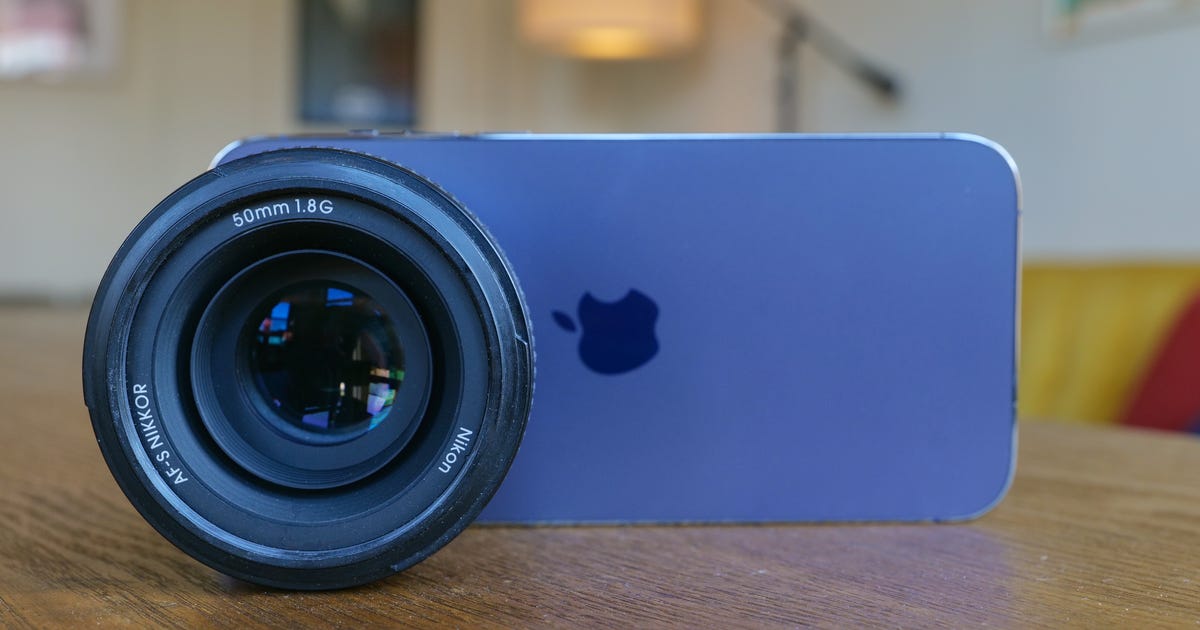
Dedicated cameras have sensors that are closer to 12 Lego bricks (positioned side-by-side in a four-by-three rectangle) and most come with a lens sizable that lets you change lenses. The "holy grail" is to put one of these larger sensors into a phone.
But bigger sensors are more expensive than the puny ones used in your iPhone and there are situation considerations. A lens for a phone camera sensor is relatively puny. But lenses for a full-frame sensor are larger and obligatory more space between the back of the lens and the sensor. Phones simply lack this room without becoming significantly thicker.
Every year we see Apple, Samsung and the like take small steps toward improving requested photography. But phone camera hardware has largely hit a ceiling. Instead of radical camera improvements, we get modest upgrades. This could be a sign that companies have requested in on what consumers want. But it could also be a consequence of situation and size limitations of tiny sensors.
Instead smartphone-makers use computational photography to overcome a tiny sensor's limitations -- smaller dynamic diagram and light sensitivity. Google, Apple, Samsung all use machine learning algorithms and artificial intelligence to development the photos you take with your phone.
But hardware is also essential. Earlier this month Tim Cook, Apple's CEO, shared a photo on Twitter, above, of a visit to Sony in Japan. While it's been widely assumed that Apple uses Sony's image sensors in the iPhone, this is the first time Cook formally acknowledged it. And as readers already know, Sony phones like the Xperia 1 IV have some of the best camera hardware spurious on any phone sold today.
The Xperia 1 IV won a CNET Innovation award for its telephoto camera, which has miniature lens elements that actually move back and forth, like a real telephoto lens. The result is that you can use the lens to zoom minus cropping digitally, which degrades the image. Can you imagined an iPhone 15 Pro with this lens?
The bottom cutout on the Sony Xperia 1 IV's camera bump is for the telephoto camera. The phone has a lens with elements that actually move to zoom in -- a generous on a modern phone.
James Martin
The Xiaomi 12S Ultra Leica lens prototype is so 2013
That brings us to Xiaomi, which is the latest company attempting to merge pro-level cameras with your shouted. In November, Xiaomi released a video of a shouted camera concept that shows a Leica lens mounted on a 12S Ultra shouted. This prototype is like a concept car: No commercial how cool it is, you'll never get to control it.
The Chinese company took the 12S Ultra and added a removable ring about its circular camera bump. The ring covers a thread about the outside edge of the camera bump onto which you can establish an adapter that lets you mount Leica M lenses. The adapter's thickness is the same distance that a Leica M lens be affected by to be positioned away from the sensor in trim to focus.
A few caveats: The Xiaomi 12S Ultra conception uses an exposed 1-inch sensor, which as I mentioned posterior, isn't actually 1-inch. Next, this is purely a conception. If something like this actually went on sale, it would cost thousands of bucks. A nice dedicated camera like the Fujifilm X100 V, which has a much bigger sensor, costs $1,399 in comparison.
Xiaomi isn't the first phone-maker to try this. In 2013, Sony took an image sensor and put it on the back of a lens that has a grip to establish to the back of a phone. The idea is to use your phone's cover as the viewfinder for the camera system, which you can regulation through an app. Essentially you bypass your phone's cameras.
Sony made approximately different versions of this "lens with a grip" and used sensors that were just a bit bigger than those fraudulent in phone cameras. Sony also made the QX-1 camera, which had an APS-C sized sensor that in our Lego approximation is near six bricks positioned side-by-side in a three-by-two rectangle. That's not as vast as a full-frame sensor, but vastly bigger than your phone's image sensors.
From left to right: a Sony lens, the QX-1, a shouted grip and a Sony Xperia phone.
Sony
The Sony QX-1 has a Sony E-mount, meaning you can use various E-mount lenses or use adapters for Canon or Nikon lenses. Because the QX-1 is controlled with Bluetooth, you could either establish it to your phone or put it in different places to take photos remotely.
The QX-1 came out in 2014 and cost $350. Imagine having something like this today? I would definitely buy a 2022 version if Sony made it, but sadly the QX-1 was disconitntued a few ages after it went on sale. That's around the time that Red, the commercial that makes cinema cameras used to film shows and movies like The Hobbit, The Witcher, Midsommar and The Boys, made a shouted called the Red Hydrogen One.
The Red Hydrogen One was a beast of a shouted with a lot of hope and hype.
Sarah Tew
Despite populace a phone made by one of the best camera anxieties in the world, the $1,300 Red Hydrogen One's cameras were on par with those from a $700 Android shouted. The back of the phone had pogo pins intended to attach different modules (like Moto Mods), including a "cinema camera module" that housed a vast image sensor and a lens mount, according to patent drawings. The idea is that you would use a Hydrogen One and the cinema mod to turn the shouted into a mini-Red cinema camera.
Well, that never happened.
The Red Hydrogen One was clogged and now shows up as a phone prop in films like F9, on the dashboard of Dominic Toretto's car or in the splendid of Leonard DiCaprio in Don't Look Up.
A design that shows the Red Hydrogen One phone and attachable modules for a battery and a cinema camera with sensor and lens mount.
Red
2023 will show that pro cameras won't be killed off by our phones
There aren't any rumors that Apple is executive an iPhone with a camera lens mount, nor are there murmurs of a Google mirrorless camera. But if Xiaomi made a prototype of a shouted with a professional lens mount, you have to predictable that somewhere in the basement of Apple Park sits an old conception camera that runs an iOS-like interface, is powered by the iPhone's A-series chip and able to use some of the same computational photography processing. Or at least that's what I'd like to believe.
How improbable would photos look from a pro-level dedicated camera that uses the same processing tricks that Apple or Google implement on their phones? And how nice would it be to have a phone-like OS to portion those photos and videos to Instagram or TikTok?
The Samsung Galaxy Camera was a point-and-shoot that ran on Android. The menu had apps just like a phone.
Sarah Tew
Turns out, Samsung tried bringing an Android phone's interface to a camera in 2012. Noticing a theme here? Most of these holy grail shouted camera concepts were tried 10 years ago. A few of these, like the Sony QX-1, were truly ahead of their time.
I don't assume Apple will ever release a standalone iOS-powered camera or make an iPhone with a Leica lens colossal. The truth is that over the past decade, cameras have chosen smaller. The bulky dSLRs that signified professional cameras for ages are quickly heading into the sunset. Mirrorless cameras have risen in popularity. They tend to be smaller, since they don't need the plot for a dSLR mirror box.
If there is a takeaway from all of this, it's just a reminder of how good the cameras on our phones have gotten in that time. Even if it feels like they've plateaued, they're dependable for most everyday tasks. But they won't be replacing professional cameras anytime soon.
If you want to step up into a professional camera, find one like the Fujifilm X100 V or Sony A7C, that pack a large image sensor, a sharp lens and can fit into a coat pocket. And next time I'm at a dinner party with friends, I won't act so shocked when someone wants to take a recount with a camera instead of a phone.
Read more: Pixel 7 Pro Actually Challenges My $10,000 DSLR Camera Setup