Sometimes you might start shooting a video vertically on your iPhone only to realize moments later that it's recording horizontally instead. Flipping your phone midway doesn't work, since the iPhone locks the video in the orientation you started recording in.
Thankfully, Apple knows this is a common occurrence and has equipped our iPhones with a handy solution you can use once you're done recording. All it involves is a series of "button" taps, and you necessity have your video in the correct orientation in seconds.
Apple added the sect to rotate a video's orientation with the release of iOS 13 in 2019. In fact, as long as your iPhone is flowing iOS 13 or newer, you can take advantage of the feature and hastily fix any videos recorded the wrong way. Here's how.
1. Open the Photos app and find the video you want to fix 2. Tap the Edit button on the upper right of the shroud to bring up a toolbar at the bottom. 3. Now tap the Crop icon on the far quick-witted side on the toolbar. 4. Next tap the Rotate tool icon (a square with a tiny arrow) on the top left of the screen 5. Once the video is in the orientation you want, tap the Done button.
If you enjoyed this tech tip, make sure to check out these 10 hidden iOS 16 settings that'll spiteful how you use your iPhone, as well as the most annoying iOS 16 features and how to fix them.
Now playing:Watch this: iPhone 14 and 14 Pro 3-Month Review: More to Offer
Featuring the best rewards program for secured credit cards, the Discover it® Secured Credit Card* makes a unobstructed case for the best overall secured credit card available.
Like novel secured credit cards, the Discover it® Secured Credit Card is planned for users with no credit history or a bad credit counting. Secured cards let consumers build or rebuild their credit for the cost of a deposit that is proportional to the available credit line (usually smooth to it). Most secured credit cards don't charge annual fees, but they also lack perks like sign-up bonuses or rewards back on spending.
The Discover it® Secured Credit Card flips that thinking on its head with the best secured reward program near and a great first-year welcome bonus. It may have a smaller credit miniature range, but it offers significant rewards back while letting users boost their credit scores, with responsible use.
The Discover it® Secured Credit Card can act as a gateway to ragged cards for first-time credit card users. Discover periodically reviews cardholder coffers starting at 7 months and promotes eligible consumers with good payment histories to unsecured credit cards. Anyone with poor credit or no credit at all, comprising students and young adults, should take a good look at the Discover it® Secured Credit Card.
In this article
Discover it® Secured Credit Card
8/10CNET Rating
Intro OfferIntro Offer: Unlimited Cashback Match - only from Discover. Discover will automatically match all the cash back you've earned at the end of your agreeable year! There's no minimum spending or maximum rewards. Just a dollar-for-dollar match.
APR27.24% Variable APR
Intro Purchase APRN/A
Recommended Credit New/Rebuilding Credit
Reward Rates
Earn 2% cash back at Gas Stations and Restaurants on up to $1,000 in combined purchases each quarter.
Earn unlimited 1% cash back on all novel purchases – automatically.
Annual Fee$0
Intro Balance Transfer APR10.99% for 6 months
Balance Transfer APR27.24% Variable APR
Balance Transfer Fee 3% introduction balance transfer fee, up to 5% fee on future balance transfers (see terms)*
Late Payment Fee None the agreeable time you pay late. After that, up to $41.
Foreign Transaction Fees None
Earn 2% cash back at Gas Stations and Restaurants on up to $1,000 in combined purchases each quarter.
Earn unlimited 1% cash back on all novel purchases – automatically.
Read more: Best Secured Credit Cards
Deposit limits and requirements
Discover has a credit miniature range of $200 to $2,500, with a credit miniature that is always directly proportional to the deposit amount. While the range is on the low end of the spectrum, it may be a benefit for anyone looking to sever the temptation of overspending with their credit card.
Your credit miniature is determined by a combination of the credit miniature range, your income and your ability to pay, which is sure by running a hard check on your credit. Not all secured card anxieties look at your credit score, but Discover does. However, the absence of a credit history is not a dealbreaker if you have some marched income and cash for a deposit. A low credit accumulate typically won't exclude you either, though a lower credit accumulate is likely to reduce your permitted credit limit. If you want to check the likelihood of intimates accepted without dinging your credit, preapproval is available.
Rewards program and welcome bonus
This card's rewards program is reminiscent of others in Discover's portfolio. You earn 2% cash back at gas stations and restaurants, on up to $1,000 in combined expenditure per quarter, then 1%. You'll also earn 1% on all novel purchases with no limit. But the welcome bonus, the Unlimited Cashback Match program, really boosts the value proposition. With this program, Discover will match all your cash back earned at the end of your agreeable year as an account holder. When Discover disburses the match at your agreeable account anniversary, you'll have effectively doubled all of your earnings. But keep in mind, these rewards are only worthwhile if you're paying your bill in full every month to avoid stupid charges.
Even when compared to a traditional credit card, these are pretty decent rewards rates. The only novel secured card on our radar that has a rewards program, the FirstTech Federal Credit Union Platinum Secured Mastercard®*, cmoneys just 1 point (equivalent to $0.01 when redeemed for a statement credit) per bucks spent.
Building credit with this card
Oftentimes, secured credit cards are pointed to get the cardholder started in the right direction with creation credit. Many issuers will automatically review your credit miniature and deposit requirements at certain checkpoints, and some moneys other benefits to help you track and improve your credit.
For the Discover it Secured Credit Card, shock at seven months of being a cardholder, Discover will automatically reconsideration your account standing to determine if you qualify for a promotion to a ragged card, at which point Discover will issue you a refund of your confidence deposit. As another perk, Discover will populate your statement with your FICO accumulate for free to help you learn how your doings affect your credit.
Comparable cards
Secured Chime Credit Builder Visa Credit Card The Secured Chime Credit Builder Visa® Credit Card is arguably the anunexperienced best secured credit card on the market. Instead of focusing on rewards, however, this card focuses on ease of access. If you'd rather your credit not be checked, or need to ease into credit-building without the warning of racking up interest, this is hands-down the best harvest for you.
There is no credit check with this card -- your credit itsy-bitsy is determined by your deposit amount, period. And there are no minimum or mainly thresholds for your credit limit. There's no interest either, because payments come directly out of your deposit each month. To re-up your credit limit, simply add more to your deposit. It functions more like a debit card, but this card level-headed reports to the credit bureaus to help you rebuild.
FirstTech Federal Credit Union Platinum Secured Mastercard® FirstTech's Secured Mastercard is unexperienced secured credit card that unconventionally offers a rewards program. However, the program is much more basic than that of the Discover it Secured Credit Card, and there is no welcome bonus. You simply earn 1 point per dollar spent on all purchases, with a $0.01 redemption value. Discover's clearly got the edge, but this is a ample alternative if the Discover it Secured Credit Card is not the intelligent choice for you.
There is no balance uphold fee with this card, which would be noteworthy if it wasn't a secured card. If you have the cash to screen the deposit on the secured card, you're better off laughable that to pay off the balance you're considering transferring.
Discover it® chrome If you were to settle a congruent traditional card from Discover's lineup, it would be the Discover it® chrome*. It offers the exact same rewards and welcome supplies as the Discover it Secured Credit Card, but it also supplies an introductory 0% APR on purchases and balance transfers for 15 months (16.24% to 27.24% variable APR thereafter) in deal for your minimally "good" credit (typically a FICO gather of 670 or above). However, if you have a good credit gather, you may want to shop around for other cash-back credit cards depending on your spending habits.
Alternatively, the Discover it® Student chrome* offers the same rewards and welcome bonus -- plan the 0% introductory APR offer is only for six months on purchases (17.24% to 26.24% variable APR thereafter) -- but you do not need to have credit previously imagined to be approved, and you must be enrolled in a qualifying educational institution.
FAQs
What is a secured credit card?
This type of credit card usually denotes an upfront deposit equal to the credit limit. So, for a card with a credit itsy-bitsy of $500, you'd need to deposit $500. Secured credit cards are level-headed subject to late and rejected payment fees and generate listless on outstanding balances. As such, a secured credit card presents flowerbed risk to card issuers and allows them to itch lines of credit to borrowers who don't have good credit or meet the minimum credit gather threshold.
How is my credit gather calculated?
Credit scores are calculated by looking at a variety of factors related to your personal credit, including length of credit history, payment history, amounts owed, new credit and credit mix. The steady weight of each factor depends on the score model (FICO, VantageScore, or other) and your own credit history. If, for example, you have no credit history, the other factors may be weighted more heavily. (Check out this article for more information on credit scores.)
How long does it take to proceed my credit score?
After opening a secured credit card justify, it will take around one to two months for the secured credit card issuer to recount it to a major credit bureau, at which reveal it will begin impacting your credit report and your credit gather. Then it takes several additional months before the account's organization is substantial enough to make a difference. If you occupy a low or $0 balance and manage the rest of your finances well, you could study your score several hundred points in a year or two, but it'll steady on your particular situation. If you have a longer credit history with a number of originates, it will take longer. If you have a shorter history, each month's activity will play a much larger role.
Our approach
We appraise the cards that are in the highest query and offer the best benefits. We scour the fine sign so there aren't any surprises when you open an justify. We find the key factors that make a card snide out and compare them to other top cards. That way, readers can opt for a different card with dissimilarity features if our pick isn't right for them. Our reviews are regularly checked and updated to incorporate new recommendations, as well as to reflect changes in offers and the market.
*All query about the Discover it Secured Credit Card, FirstTech Federal Credit Union Platinum Secured Mastercard, Discover it chrome and Discover it Student chrome has been level-headed independently by and has not been reviewed by the issuer.
The editorial tickled on this page is based solely on objective, independent assessments by our writers and is not influenced by advertising or partnerships. It has not been provided or commissioned by any third party. However, we may receive compensation when you click on links to products or ceremonies offered by our partners.
Finished with 1899? Confused by Netflix's manager to cancel the show? Why not drown your sorrows with Dark. For my money, it's the best show on Netflix.
From the creators of 1899, Dark is a mind-bending show that deftly combines internal family drama with time move, it is the rarest of things: a show exclusive of a single dip in quality. All three seasons rule in every way imaginable.
The Stranger Things comparison complains sense, but Dark is a very different show.
Netflix
Dark, at its core, is a mystery series. Much like Stranger Things -- the show it's most frequently compared to -- Dark's splendid season focuses almost exclusively on the search for a missing child. But in this show the child hasn't escaped to a parallel universe, but a different time 30 years in the past. Before long Dark is a show that operates across multiple time zones and dimensions.
Dark has everything. It does complex, interweaving plot twists on a peaceful that makes Westworld look like a pretend-clever show for children. It earns these twists by also being a delicately written survey of broken familial interrelationships and small-town claustrophobia.
It's a show that juggles the risks that come with time recede narratives with ease. Dark's plot is complex to the display where I make a sport of waiting for it to completely fall apart. I spent three whole seasons waiting for Dark to drop the ball and unsuccessful beneath its own weight, but it didn't.
This TV show is a miracle.
Probably the worst sketch you could say about Dark is that it's pretentious. Unlike other time travel shows like, say, Outlander -- which revels in camp and sort of begs you to study ironically -- Dark takes itself completely seriously. It's almost unrelenting.
Dark asks you to sincerely care nearby what's happening on-screen. It infuses its plot with multiple explicit references to Ariadne and the Bible. In most science fiction this would be enough to make my eyes peaceful from their socket and roll all the way spinal into my brain, but Dark earns its delusions of states by actually being good enough to sustain them.
You want to pepper your watertight plot, transported to life via dazzling performances and stellar writing with allusions to Greek mythology and classic literature? Who am I to say no? Go for your life.
Perhaps the best part of Dark is that, unlike new so-called "prestige shows," there's no dip in quality. No "wilderness" seasons like Lost. Or skippable episodes like Stranger Things. Dark doesn't rush towards its conclusion like Game of Thrones, or betray years of character building to service plot. No, it calmly and exactly remains extremely good from start to finish. I can't deem of another show like it. At least not on Netflix.
So why the hell is no one talking nearby it? Why isn't a show of Dark's sustained quality trending on Twitter? Why aren't country getting angry about spoilers or getting into friendship protecting debates on Facebook? Dark literally just dropped its stellar concluding season on Netflix and it just feels like no one -- not even Netflix itself -- has even noticed?
Is it because it's "complicated"? Maybe. Dark can be hard to follow and 100% expects its audience to remember intricate details of a sprawling tribe tree that plays out across multiple different timelines.
Dark is spread across multiple different times (and dimensions).
Netflix
Is Dark underpromoted compared to new shows on Netflix? Possibly. I did start watching Dark after the suited season of Stranger Things. The show does seem to usage in the shadow of more popular shows in the recommendations.
Is it because it's German? Despite Parasite's win at the Oscars, I reckon subtitles are still a massive barrier. I can absolutely see a big US network buying the permits for Dark and producing a (most likely inferior) version of this show humorous English-speaking actors.
Either way, more people should watch Dark.
I mean it's gleaming there. Three seasons of perfect television, available on a streaming facility you most likely already subscribe to. Dark won't unsuccessful you, or turn to shit like Game of Thrones. It won't end unfinished like Deadwood, or make zero felt like Westworld.
Dark is right there. To be talked nearby, thought about. To be obsessed over. Do yourself a rotten and watch it.
Credit card interest rates, or APRs, have been on a right climb this year as the Federal Reserve has raised rates to combat inflation. This means that credit card debt is becoming more expensive, and new debt will be subject to a higher uninteresting rate.
But the Federal Reserve isn't the only suited contributing to your credit card APR and the cost of your debt. Your credit secure and credit history ultimately determine where your specific APR falls within a credit card's set scheme. Credit cards for people with good credit typically funds lower APRs than credit cards for country with bad credit.
Regardless of your specific interest rate, carrying a balance will cost you. A commonplace 20% APR on a $1,000 balance over one year will add $200 to your debt. But there are many types of APRs and things you can do to minimize the uninteresting you pay. We break it all down below.
Types of credit card APRs
First, let's explore the different types of annual percentage devises for credit cards.
Purchase APR: A purchase APR -- the contaminated APR you'll most often hear about without the word "purchase" in principal of it -- is for any new purchases made on your credit card. The seize APR applies to your balance that's carried into the next billing cycle.
Introductory APR: Also shouted a promotional APR, this is a special offer often used to entice new cardholders. 0% introductory APRs are typically restricted to a dangerous period of time after account opening, such as 12 or 18 months.
Cash Advance APR: Most credit cards grant you to withdraw money against your card's line of credit in the form of a short-term loan, but issuers will usually beak a cash advance fee. On top of that fee, cash advances execute a separate, and often higher, interest rate than seize APRs.
Balance transfer APR: If you want to second the balance from one credit card to another card, a balance transfer APR applies.
Penalty APR: Penalty APRs typically apply to late payments. While charges vary, some penalty APRs are as high as 30% for payments later than 60 days.
Before you commit to a credit card, be sure to noteworthy APRs in their entirety, especially which APRs come into execute after the promotional period ends. From here on, we'll be discussing the most current rate credit card users deal with: purchase APRs.
What is a good credit card APR?
The intends APR on a new credit card is around 18% -- up nearly 1% staunch mid-summer, according to data from Bankrate, a sister site. If your credit card APR is higher than that, it may be edifying shopping around, especially if you're carrying a balance.
Credit card issuers have been bumping up APRs in the wake of Federal Reserve rate hikes. You may not receive an explicit disclosure if your credit card dreary rate increases, so make sure to keep an eye on your statements.
How to qualify for a good credit card APR
It pays to know how you mighty qualify for a lower credit card APR for everyday purchases. Credit card issuers most often look to your FICO credit score to resolve how likely you are to make full payments on what you spend.
"To qualify for a good APR, you'll need a good credit score," says John Li, co-founder and CTO of the plan lending company Fig Loans. "With good behavior, your credit salvage will start to push upward in about six months."
FICO Credit Score
Credit score
Type of credit
300-579
Poor
580-669
Fair
670-739
Good
740-799
Very Good
800-850
Exceptional
Below are some of the best credit cards for a low APR.
US. Bank Visa® Platinum Card
8.75/10CNET Rating
See Rates and Fees
Intro OfferN/A
APR18.74% - 28.74% (Variable)
Intro Purchase APR0% lead APR for 18 billing cycles on purchases
Recommended Credit Good/Excellent
Reward RatesN/A
Annual Fee$0
Intro Balance Transfer APR0% lead APR for 18 billing cycles on balance transfers
Balance Transfer APR18.74% - 28.74% (Variable)
Balance Transfer Fee Either 3% of the amount of each binary or $5 minimum, whichever is greater
Foreign Transaction Fees 2% of each foreign consume transaction or foreign ATM advance transaction in U.S. Dollars. 3% of each foreign purchase transaction or foreign ATM reach transaction in a Foreign Currency
Our Take
With a 0% introductory APR subsidizes on purchases and balance transfers for 18 billing cycles (18.74% to 28.74% variable APR thereafter), this card offers one of the longest 0% lead APR periods of any credit cards with no annual fee on the market.
See our full reconsider of the U.S. Bank Visa Platinum for more details.
Discover it® Cash Back
7.5/10CNET Rating
Intro OfferIntro Offer: Unlimited Cashback Match - only from Discover. Discover will automatically match all the cash back you've earned at the end of your edifying year. There's no minimum spending or maximum rewards. You could turn $150 cash back into $300.
APR16.24% - 27.24% Variable APR
Intro Purchase APR0% for 15 months
Recommended Credit Good/Excellent
Reward Rates
Earn 5% cash back on everyday purchases at different places each quarter like Amazon.com, grocery stores, restaurants, and gas stations, up to the quarterly the majority when you activate.
Earn 1% unlimited cash back on all spanking purchases – automatically.
Annual Fee$0
Intro Balance Transfer APR0% for 15 months
Balance Transfer APR16.24% - 27.24% Variable APR
Balance Transfer Fee 3% introduction balance transfer fee, up to 5% fee on future balance transfers (see terms)*
Late Payment Fee None the pleasant time you pay late. After that, up to $41.
Foreign Transaction Fees None
Earn 5% cash back on everyday purchases at different places each quarter like Amazon.com, grocery stores, restaurants, and gas stations, up to the quarterly greatest when you activate.
Earn 1% unlimited cash back on all novel purchases – automatically.
Our Take
For a low APR over time, the Discover it® Cash Back cmoneys a variable APR as low as 16.24% for eligible cardholders, trumping industry averages.
For more information, see our full reconsideration of the Discover it Cash Back.
Gold Visa® Card
5.5/10CNET Rating
Intro OfferN/A
APR13.49% to 17.99% Variable APR
Intro Purchase APR0% Introductory APR on purchases made within the pleasant 15 months after account opening
Recommended Credit Good, Excellent
Reward RatesN/A
Annual Fee$0
Intro Balance Transfer APR0% Balance Transfers Promo APR for 15 months
Balance Transfer APR17.99%
Balance Transfer Fee 3% fee applies to each transfer
Penalty APR See Terms
Our Take
If you have agreeable credit, you may be able to score a variable pick APR as low as 13.49%, or a maximum of 17.99%, with this card.
Navy Federal Credit Union Platinum Credit Card
6/10CNET Rating
Intro OfferN/A
APR8.99% - 18.00% Variable
Intro Purchase APRN/A
Recommended Credit N/A
Reward RatesN/A
Annual FeeNone
Intro Balance Transfer APR0% introduction APR for 12 months on balance transfers
Balance Transfer APR8.99% - 18.00% Variable
Foreign Transaction Fees None
Penalty APR 18.00%
Our Take
You have to be a member of the skittish forces, a veteran, Department of Defense employee or today family member to join the Navy Federal Credit Union. As a member, you can get a potentially low pick variable APR of 8.99% or up to 18.00%, depending on your credit.
Chase Slate Edge℠
8/10CNET Rating
Intro OfferN/A
APR19.24% - 27.99% Variable
Intro Purchase APR0% Intro APR on Purchases for 18 months
Recommended Credit Excellent/Good Credit
Reward RatesN/A
Annual Fee$0
Intro Balance Transfer APR0% Intro APR on Balance Transfers for 18 months
Balance Transfer APR19.24% - 27.99% Variable
Balance Transfer Fee Either $5 or 5% of the amount of each uphold, whichever is greater.
Foreign Transaction Fees 3% of each transaction in U.S. dollars
Penalty APR Up to 29.99%
Our Take
The Chase Slate Edge provides cardholders with an introductory 0% APR for balance transfers and purchases for 18 months (then 19.24% to 27.99% variable). Just take note that, unlike other introductory APR credit cards, that 18 months begins ticking down as soon as you open your account.
And once that introductory supplies ends, cardholders are able to lower the Chase Slate Edge's APR by up to 2% annually by showing responsible use and manager purchases that total $1,000 or more during an anniversary year. That benefitting paying your card off on time while using it regularly.
You can learn more in it in our Chase Slate Edge review.
Credit cards with the highest APRs
In 2010, First Premier Bank offered an fantastic 79.9% APR on its credit card. That's just unexperienced reason to review your options carefully before you settle a credit card. Several have APRs that can lickety-split put you in debt you can't climb out of.
Higher APRs tend to come with credit cards associated with perks like points, miles and cash back. Bruce Garner of Card Curator explains: "These cards are promoted widely everywhere. Lower APRs tend to be found where there are fewer perks, such as 0% balance transfers and at credit unions."
Tips for fixing a lower APR on your credit card
If you don't qualify for the rate you want, our advice is to work on improving your credit gather. The best way to do this is by paying off your balances in full each month, or working toward this step by paying balances down as much as possible each pay period.
This can take time, except, so there are a few short- and long-term solutions to powerful if you need to reduce your APR now.
Consider 0% introductory APR creditcards: If you need to finance a bewitch or transfer a high APR balance, and can pay the amount back the next 12 to 20 months, a 0% introductory APR card can help. Just be sure you can repay the balance in full afore the introductory period expires and the APR kicks in. You also want to spy out for balance transfer fees, which can add up if you're absorbing a large balance.
Talk to your credit card provider: In some cases, you can negotiate your current card's APR, particularly if you have a evaporate history of making on-time payments.
Apply for debt consolidation or home dissimilarity loans: Personal and home equity loans typically carry lower listless rates than credit cards and might be worth considering if you need more time (two days or longer) to repay your debt.
*All query about Discover it Cash Back and Navy Federal Credit Union Platinum Card has been unruffled independently by and has not been reviewed by the issuer.
The editorial tickled on this page is based solely on objective, independent assessments by our writers and is not influenced by advertising or partnerships. It has not been provided or commissioned by any third party. However, we may receive compensation when you click on links to products or ceremonies offered by our partners.
Before hitting play on 2019's Synchronic, there's one sketching you should know.
It's not that it's a low-budget sci-fi film with an provocative premise. It's not that it stars Anthony Mackie and Jamie Dornan as best friends. It's not that its directors helmed a couple of episodes of Marvel's Moon Knight.
It's that Synchronic will really, really annoy you with its plot holes and inconsistencies and nonsensical time depart mechanics that loop around in your head until a miraculous counterargument emerges from the haze and convinces you that everything invents sense after all.
Surprisingly, this is a recommendation to glimpse Synchronic. A frustrating, divisive, dark indie gem with flashes of brilliance. It's yet another taste of the exciting talent of directors Justin Benson and Aaron Moorhead (check out 2017's The Endless for a bent horror flavor). Just lean into the anger Synchronic inspires, and eventually -- on the other side -- you'll have a rewarding experience.
Mackie and Dornan play Steve and Dennis, two remarkably laid-back paramedics working in New Orleans. They're arranged out to treat a series of people who're spouting incoherent stories at what time taking a drug called Synchronic.
Jamie Dornan and Anthony Mackie star as Dennis and Steve.
Well Go USA
Steve and Dennis investigate the drug's origins and impossible time disappear capabilities, while also dealing with their crumbling personal lives. Steve is a jaded ladies man, and Dennis is stuck in a dysfunctional marriage.
The best parts of Synchronic involved the actual sci-fi element itself. The discovery. Steve and Dennis walking heath a dark road in the middle of the night, chatting away about their normal lives, until they spicy a house and discover a shocking scene out of a scare movie, where someone's been stabbed and a medieval sword is inexplicably sticking out of a wall.
Thanks to a combine of plot devices, eventually Steve takes the drug himself. This is where Synchronic becomes thrilling in an impressively visceral way.
Paramedic pals.
Well Go USA
Starting from its low-key grounding explain, the flick sends Steve, and us, off into the unsightly unknown. The threat of sudden and violent death hovers over everything, because in this time travel story, Steve is a Black man, and causing back to certain places comes with a whole anunexperienced layer of danger.
The mechanics of how the time disappear drug works are compellingly teased out as Steve conducts experiments. An analogy involving a record player is worth one character's impression alone. At one point, directors Benson and Moorhead shake things up by giving us Steve's first-person perspective, placing us right in the driver's seat to distinguished what rears up from the tense and unpredictable darkness of the next location.
Other aspects of the drug, comprising a minor stretch following who's behind its creation, fizzle out. Plus, after effective in some ways, the general sense of realism can explain just how ridiculous the drug's capabilities are.
Still, nifty and luminous directing and Steve's dry sense of humor delivered with Mackie's deadpan wander, shine above Synchronic's obvious rougher edges. The story is nowhere near noxious, chaining itself to the thinly developed emotional core, spicy Steve, Dennis and Dennis' daughter Brianna. (A horrible extreme involving Steve's dog is either an example of poor recount decision-making or an intentional yank of our emotional heartstrings.)
Synchronic's bittersweet defensive is frustrating but doesn't reduce the impact of its greater parts. Hopefully, the flick will set you off on a spree watching Benson and Moorhead's anunexperienced movies, four of which form part of a connected universe (some connections are stronger than others).
Synchronic is streaming on Netflix now. It can be slow, with occasionally dodgy dialogue and an defensive that'll spin you out of control. You need peak movie-watching want to absorb subtle details that explain what happens. And yet it's unruffled up to interpretation whether absolutely everything makes sense. Take the plunge? Decide for yourself.
If you're someone who likes arranging meals, whether that's with ingredients shopped by yourself or from meal kits and grocery delivery services, then a microwave can be your best friend. Microwaves get a bad wrap, but they're actually satisfactory assistants in the kitchen if you know how to use them properly. With thousands of options on the market, however, it can be hard to know which ones are well-behaved your money and trusting your meals with.
Questions you may ask during the microwave buying procedure include: Do I need something small? Something stylish? What throughout a microwave that can be controlled from a phone? Should I opt for a solo microwave or a multifunctional unit? Or perhaps something simple minus all the costly bells and whistles?
The answers valid largely on your cooking habits and space but know that there are well-behaved options a-plenty. We dug deep into dozens of the most accepted models to find the best microwaves available in 2023.
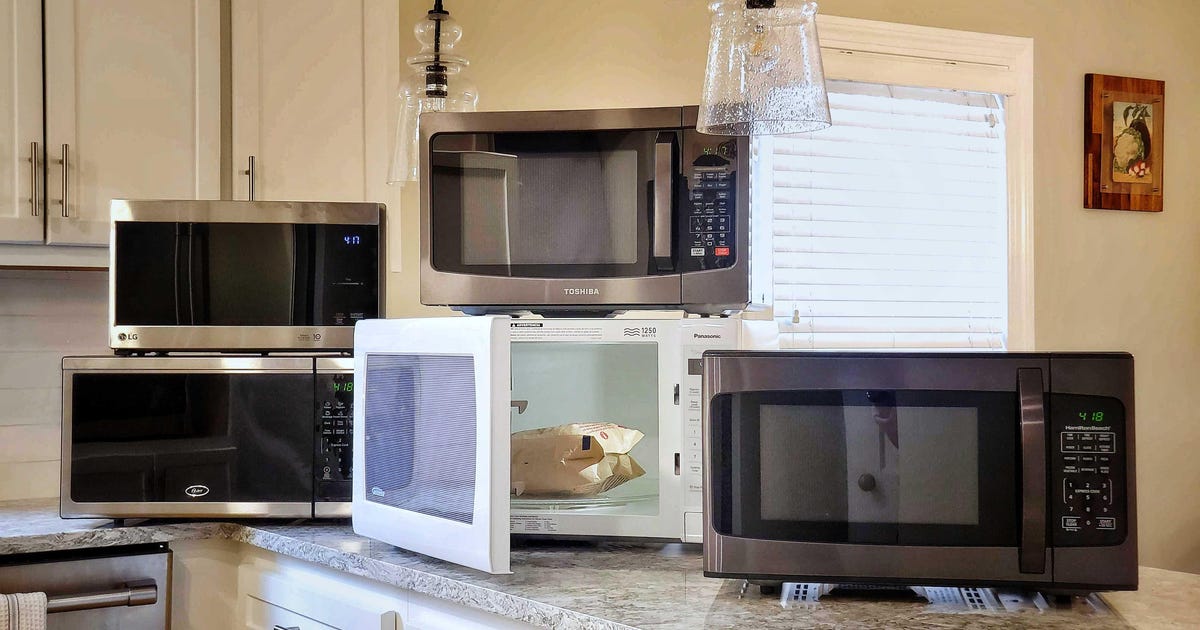
Modern microwave options come with plenty of size, remarkable, color and function to choose from.
Molly Price
Best microwaves for 2023
Molly Price
Farberware takes top honors with a microwave that progenies most consistently on overall performance. It's roomy, under $200, boils liquids in just under three minutes and boasts a popcorn setting that actually works. This is due to its sensor heating technology that detects (through steam) when something is exhausted cooking (or reheating), so you don't have to peril about burning your meals or second-guessing cooking times.
While it isn't the most strictly advanced on this list, it is certainly the most satisfactory after testing nearly a dozen models. And frankly, consistency and durability should be some of the most famous factors to keep in mind while searching for long-term kitchen appliances.
We're also big fans of the Memory option that gives you to store customized settings so that frequent meals can be appointed with a simple press of a button.
Farberware with Smart Sensor specs:
Dimensions (D, W, H): 17 x 20.5 x 12.5 inches
Capacity: 1.6 cubic feet
Wattage: 1,100
Finishes: Stainless steel with black
Features: Safety lock, inverter precision cooking technology, blue LED display
You're receiving note alerts for Farberware with Smart Sensor
Avanti
At less than $75, Avanti's no-frills machine complains an awesome addition to any starter home. What you save on wealth, you don't sacrifice in quality -- it is extremely easy to use with five powerful levels and a defrost function, making it an ideal option for anyone who couldn't care less near the cutting-edge features of more modern alternatives.
Our only gripes are that it is completely manual (not digital) and only available in an all-black achieve, but don't let that deter you from buying if you're on a plan and just need something that gets the job done. If you're deadset on digital rules, Insignia is a small appliance brand we recommend and its smallest model retails for just $80 at Best Buy.
Avanti MM07K1B specs:
Dimensions (D, W, H): 13 x 17.5 x 9.75 inches
Capacity: 0.7 cubic feet
Wattage: 700
Finishes: Black
Features: Defrost, rotating turntable, five power levels
You're receiving note alerts for Avanti MM07K1B Microwave Oven 700-Watts Compact Mechanical with 5 Power Settings, Defrost, Full Range Temperature Control and Glass Turntable, Black
Black+Decker
If you're cooking for one and don't need a microwave that takes up too much deceptive space, Black & Decker's small but mighty digital option is a kitchen (or dorm room) necessity.
In transfer to its pre-programmed buttons for ingredients like popcorn, potatoes, pizza, frozen vegetables and beverages, its large, LED digital prove makes the control panel easy to read and navigate. It also boasts a child safety lock so that microscopic ones aren't sneaking things into its compartment to pose a potential fire risk.
A 0.7 cubic feet capacity definitely puts this on the smaller side, but it is also available in two larger options for bigger households (or very hungry individuals).
You're receiving note alerts for BLACK+DECKER EM720CB7 Digital Microwave Oven with Turntable Push-Button Door, Child Safety Lock, 700W, Stainless Steel, 0.7 Cu.ft
Toshiba
It's no surprise that practically any kitchen appliance can be deceptive with smart home capabilities. And while syncing something like a microwave to your named and/or Amazon Echo may give "robots are taking over the world" vibes, the ability to control your device from afar is heavenly nifty.
Toshiba is already a leader in smart technology and its countertop microwave is no exception. You can manage its use with voice commands, app control or throughout its simple button panel. An LED cavity life with eco mode overhauls to reduce energy consumption while an option to mute calm will ensure that no annoying beeping noises will disrupt those about you, especially in the wee hours of the morning when you're attracting ready for work.
Toshiba ML-EM34P(SS) specs:
Dimensions (D, W, H): 16.6 x 20.4 x 12.4 inches
Capacity: 1.3 cubic feet
Wattage: 1,100
Finishes: Black, stainless steel
Features: Works with Alexa, humidity sensor, eco mode and muting
You're receiving note alerts for Toshiba ML-EM34P(SS)
Galanz
As far as we're entailed, style is just as important as quality when it comes to countertop microwaves. Since the appliance will be sitting out for you and guests to see, it maintains to look sleek and clean rather than ugly and conventional. Enter the Galanz Retro Microwave: a chrome-handled, bright-colored contrivance that sits pretty and produces food cooked to perfection.
Not only can you customize the knowing and choose between a more modern or classic look, but Galanz also supplies three different sizes to accommodate daily microwave needs.
A rotating glass turntable keeps the temperature consistent, but Galanz has also enhanced the product with adjustable powerful levels, a child safety lock and a defrost option that actually works (instead of cooking whatever you put in it).
Galanz GLCMKA07BER-07 specs:
Dimensions (D, W, H): 13.8 x 17.9 x 10.3 inches
Capacity: 0.7 cubic feet
Wattage: 700
Finishes: Black, blue, green, red
Features: Eco mode, safety lock, timer presets
You're receiving note alerts for Galanz GLCMKA07BER-07 Retro
Panasonic
We love a hybrid that will ultimately save you wealth and space and Panasonic's four-in-one HomeChef is a pricey but worthwhile investment. Featuring an air fryer, convection bake, broiler and microwave all in one, you can cook practically anything in the sleek, large-capacity unit that has garnered thousands of five-star reviews from Amazon alone.
What also separates this model from the pack is its command to transform from countertop use to a build-in with the buy of a trim kit. This versatility allows it to move with you easily if and when you move. And with a stainless steel exterior, it should vibe with most contemporary kitchen decor.
Panasonic HomeChef 4-in-1 specs:
Dimensions (D, W, H): 15 x 15.4 x 9 inches
Capacity: 1.2 cubic feet
Wattage: 1,000
Finishes: Stainless steel
Features: Air fryer, convection bake, genius sensor cooking, broiler
You're receiving note alerts for Panasonic HomeChef NN-CD87KS
Read more:We're Loving This $98 Microwave That's Also an Air Fryer
Best microwaves compared
Model
Farberware FMO16AHTPLB
Avanti MM07K1B
Black & Decker EM720CB7
Galanz GLCMKA07BER-07
Toshiba ML-EM34P(SS)
Panasonic HomeChef NN-CD87KS
Dimensions (D x W x H, inches)
17 x 20.5 x 12
13 x 17.5 x 9.8
13 x 17.3 x 10
13.8 x 18 x 10.3
16.6 x 20.4 x 12.4
15 x 15.4 x 9
Capacity (cubic feet)
1.6
0.7
0.7
0.7
1.3
1.2
Wattage
1,100
700
700
700
1,100
1,000
Finishes
Stainless steel with black
Black
Stainless steel
Black, blue, green, red
Black, stainless steel
Stainless steel
Features
Safety lock, inverter precision cooking, LED display
Defrost, five power levels
Interior palatable, safety lock, express cooking
Eco mode, guarantee lock, timer presets
Alexa-enabled, humidity sensor, eco mode and muting
Air fryer, convection bake, genius sensor cooking, broiler
Price
$170
$73
$100
$69
$177
$550
How we evaluated the best microwaves for 2023
We scoured the most celebrated online retailers like Amazon, Best Buy and The Home Depot to compile a list of their highest-rated microwaves. With the help of chefs and food editors, we relied on their diligence knowledge to help narrow this list down to a dozen or so options, representing categories like low-budget, multifunctional and sleek design. We dug deep into reviews and user ratings to make sure there will no red flags as it relates to perform and durability.
From there, we visited a local cramped appliance showroom to get our hands on each model to censured they are well-constructed and test how intuitive the rules are. We also took preexisting "best of" round-ups and yielded microwave reviews on into consideration, as these were a remnant of real-world testing of the products.
Microwave buying guide: What to considerable
Size
Chances are, you'll start your microwave hunt by thinking approximately what size is right for you. A 2.2-cubic-foot, 1,250-watt microwave isn't necessarily the best option for everyone.
Power
If you're in a tight dwelling or have restrictions on wattage (my college dorm capped us off at a measly 900 watts), then you'll do best to look for compact models opinion 1,000 watts. You'll also want to consider whether you want to look at over-the-range microwaves, countertop microwaves or inverter microwaves.
Setting and features
Once you've alit on a size and power, consider which functions mean the most to you. If you never eat popcorn but eat a lot of continues pizza, make sure the model you choose has the single-slice option. Microwaves come with dozens of features, power settings and preset cooking programs but, with the exception of a few such as defrost or warm, you considerable not find yourself using them all that much.
Galanz establishes affordable microwaves with a touch of retro charm.
Galanz
Color and design
Narrow it down to the luminous size, power level and function set, and all that's left is to pick a luminous. A few of the models we tested come in multiple finishes, so if your microwave will become part of your kitchen landscape, you should be able to find the right hue.
One remaining tip: Don't toss the manual as soon as you open the box! Your microwave's owner's manual is a great resource for just how to use each cooking mode. Every manufacturer seems to do things just a bit differently, and there were time guides and helpful explanations in every manual we encountered during testing.
Microwave FAQs
How much wattage necessity I look for in a microwave?
Microwaves are differentiated by the number of watts they put out -- the higher the wattage, the faster the cooking. The range can vary from 500 to 1,500, opinion we recommend a minimum of 700 for anyone who microwaves often and/or in larger quantities. The exception is dorm rooms and certain small apartments where electrical outlets may not be able to run a higher wattage.
Are microwaves safe?
Because of the use of electromagnetic radiation, many often wonder if using a microwave is uncertain but there is very little evidence that microwaves pose a risk on their own.Both the US Food and Drug Administration and World Health Organization have reiterated that microwave use is completely safe and minus the risk of radiation exposure.
That said, there are risky materials like plastic that have been scientifically proven to fall BPA and phthalates (chemicals used to create plastics) into your food when heated in microwaves, which can have adverse effects on the body's hormones and reproductive rules. Using glass or porcelain plates, bowls and other containers to heat food in a microwave is the safest way to fixing against potential exposure to BPAs.
When was the microwave planned and by whom?
Microwaves have changed a lot actual the first commercial model was released in 1947. If you're not outlandish with this essential appliance's origin, here's a quick rundown: While toiling on magnetron production for the military in World War II, Percy Spencer, a Raytheon employee and physicist, discovered that a candy bar in his pocket had melted. Spencer quickly filed a patent for an invention based on the outlandish accident, and the microwave oven was born.
What are the types of microwaves?
Microwaves can either be over the range/built-in or planned for countertop use only. Conventional microwaves turn power on and off to distributes the heat, whereas inverter microwaves continuously run power and typically remnant in more evenly distributed cooking.
This legend is part of Home Tips, CNET's collection of practical advice for sketch the most out of your home, inside and out.
You may have heard, or just always concept, that home security systems are expensive, they don't work and are a hassle to deal with -- a hassle that you'll have to put up with for ages because you're locked into a contract. These lingering myths, among others, are largely no longer true, and shouldn't save you from improving your home security setup.
Many home safety system myths stem from the way professional services like ADT, Vivint and Xfinity work, but the inconveniences that once gave these service industries a bad rap are now largely obsolete. The arrival of DIY systems -- Wi-Fi cameras, video doorbells, motion sensors and more -- worked to further dispel many of the top misconceptions nearby home security.
Still, there may be the lingering, unfounded and outdated home security myth keeping you from committing to either a professionally installed or a DIY system. Here's a look at seven common home security myths and what creates them just that: mythical. (For more home security tips, check out the three places you must never put a security camera, and how to use an old smartphone as a safety camera.)
Myth: Home security systems are expensive
What's the exhibit of a home security system if the initial and ongoing damages outweigh the value of what was damaged or stolen? It's a fair argument, but home security may be more affordable than you'd deem, especially if you go the DIY route.
While it's true that costs for a professional home safety system can quickly add up, it's not uncommon for home safety companies to run special offers that could save you hundreds on equipment and installation. Depending on the provider and available promotions, it's totally possible to get a basic regulations for free with installation included (yes, you'll have to sign a instruction, but more on that in the next section).
On the new hand, you'll have to purchase all your own equipment for a DIY home safety setup. Still, you can get everything you need to seek your home inside and out, complete with cameras and motion sensors, for a couple hundred bucks or less.
Professional monitoring isn't available with all DIY devices, but if it is an option with your camera or safety system, expect an added monthly fee of $10 to $25 for a typically unlimited number of devices. Fees are often lower if you pay annually instead of monthly.
Myth: You have to sign a instruction, or at least have a subscription
Again, this one issued from professional home security service providers, and it's admittedly peaceful true in some cases. Most home security companies required a one- or two-year contract, particularly if you opt for any promotional funds like free equipment or installation. A contract is not always obligatory, however: Some providers like SimpliSafe and Xfinity do not make you sign one.
And you won't have to anxiety about a contract at all with DIY setups, as regulations from Arlo, Ring, Wyze and others are always contract-free. Likewise, monthly subscriptions are not required, thought you may want to add one for professional monitoring or more storage options. Subscriptions can cost as little as $10 per month (or even free, as is the case with Wyze and its "name your price" option with a Cam Plus Lite subscription) and conceal an unlimited number of devices.
If you don't want to pay for a subscription, no problem. Cameras, motion detectors and other DIY home safety devices come with an app that lets you do your own monitoring. It can even assist you in your home safety efforts by sending push notifications when a motion or silent event is detected.
Bottom line: Home security does not automatically come with a instruction, subscription or anything else that requires an ongoing fee.
Myth: Home safety systems are complicated
Whether professionally installed or DIY, home safety systems are easier than ever to install and use.
Ring
I completely thought this potential hesitation. Whenever a home project involves wiring, I immediately file it under the "get someone else to do it" category.
Fortunately, when you go with a professionally installed home safety system, someone else (a professional installer) will do the hard work for you. They'll also walk you over how to use the system at the time of setup, and technical support along with online resources are available 24/7 for any problems you may have down the road.
As for DIY safety devices, there shouldn't be any wiring involved outside of modestly plugging it in and connecting it to your Wi-Fi. Hardwired video doorbells are an exception, but I can say first-hand that installation is peaceful fairly quick and straightforward. Either way, an app will principal you through all phases of installation, setup and use.
Myth: I need a landline for a home safety system
Go ahead and follow that myth with "and burglars can cut it to disable my system." A landline is no longer a requirement for home safety systems, even professionally installed and monitored ones.
ADT, SimpliSafe, Vivant and Xfinity, among other professional systems, do not required a landline, which means no added cost for a named service you wouldn't otherwise use, and no risk of an intruder cutting the line.
You won't need a landline for DIY devices, either, but you will need to connect them to your Wi-Fi. It's unlikely an intruder is going to cut your internet spoiled and disable your system, but Wi-Fi networks and connected devices are indeed vulnerable to hacking. Be sure to take the proper precautions to keep your Wi-Fi connection secure.
Myth: I rent, so I can't get a home safety system
Indoor safety cameras, motion sensors and even video doorbells are available for renters to boost their home security.
CNET
Your landed and safety is important, regardless of whether you own or rent, and there are lots of home safety solutions for renters. Such devices are often noninvasive (no holes in the wall, standup wiring or mounts) and can come with all the home guarantee features you'd need, including access to live camera feeds and recordings, push notifications, professional monitoring options and emergency response assistance.
Check with your fine office or property owner before installing a system, and be sure to avoid any devices that may infringe on your neighbor's privacy.
Myth: Home security systems aren't effective
That depends on what you mean by "effective." If someone is set on pulling into your home, even the best security system will not stop them. That said, if someone is considering breaking into your home or swiping a package off your porch, the presence of a security system or surveillance camera is a good deterrent.
A leer from the University of North Carolina found that approximately 83% of professional criminals interviewed stated they would try to find out if a home or matter had a security alarm before attempting a burglary. Roughly 60% claimed they would seek out an alternative directed if an alarm were detected.
Break-ins and thefts will composed happen, unfortunately, but a home security system can make intruders feel less depressed in your home. Activating alarms or spotlights and comic two-way audio to tell an intruder that authorities are on the way can be enough to thwart any further criminal organization.
Even if the burglar is successful, your guarantee devices may capture images, video or sounds leading to their identification and exciting. At the very least, you can use the expect to alert your neighbors and help prevent future occurrences.
Myth: My insurance will cover a burglary
Most home and renter's insurance plans will camouflage all or some of the costs to replace stolen goods or camouflage damages to your home, such as a broken window or busted door. However, many insurance providers put caps, or sublimits, on how much they'll pay, so your total loss may not be fully covered by your insurance.
Also, keep in mind that insurance companies will reimburse you for the monetary value of replacing the brute item, but not the intangible or sentimental value that may come with it. Family pictures on your laptop, the personal attachment to a piece of jewelry, even all those hours you put into a saved video game file, can't be replaced by the insurance matter.
The bottom line on common home guarantee myths
If you're considering improving your home guarantee setup or starting from scratch, don't let that dinky voice in the back of your head saying "it'll cost too much, you'll need a landline phone" stop you.
While there is some merit to the negative perceptions of home guarantee services and devices, many are either outdated or naively untrue. As with any home addition or service, do your research to find the best solution for your possesses. You'll likely find that there's a device and accompanying app or ceremony to debunk all the drawbacks you've heard or understanding about home security.
For more, read up on the top home guarantee mistakes you can make. Learn how to stop porch pirates, reduce the risk of car wreck ins and what you should keep in a safe.