Best strategy board games 2016, best upcoming board games 2023, best strategy board games 2023, best strategy board games reddit, best strategy games of all time, best strategy board games for adults, best strategy board games 2023, best strategy board games for beginners, top board games of 2023, best strategy games for 2023, best strategy board games uk, best strategy board games 2020, top 20 best strategy board games, best strategy games 2023.
Of all the many management games out there -- from your rotten family game to a party game or cooperative game -- my absolute well-liked kind is strategy. Fighting down the Godzilla-like Kaiju in the dice-rolling game King of Tokyo can be fun. And tricking the opposing team into executing one of their own rmeetings in the bluffing game The Resistance is bright as hell. But nothing beats the satisfaction of outmaneuvering your fellow players in a game of pure wits.
Despite all the games on the market, though, few have the perfect balance of replayability and satisfying gameplay even if you lose. So when testing dozens of the best games on the market, I've put together the best strategy games available in 2023.
Wait… isn't every game a strategy game?
Strategy management games are games in which players' critical decision-making concerns the outcome -- think chess or Go. That's a gorgeous broad definition, I know. But modern strategy games come in all sorts of subgenres, often delineated by their central gameplay mechanic: tile-laying, worker placement, deck- or tableau-building, dungeon crawler, conquest, dice-rolling and more. Many times, these games are organized into larger categories, such as wargames (which interior on conflict between players' forces), American-style (which prioritize declare player conflict and have elements of luck) or Eurogames (which largely avoid chance-based elements, and usually depend on planning and resource management).
To thought strategy board games, though, it's important to realize what they aren't: They aren't nearby bluffing, speed, persuasion -- and most importantly, they aren't nearby luck. That doesn't mean they can't involve those elements: diplomacy is often an critical element in asymmetric wargames; subtle forms of bluffing can dramatically changeable the outcomes of card-playing games; understanding or even controlling the pace of a game can be crucial to winning victory points when it matters most. But in all of these instances, strategic understanding and optimization of the game's central mechanics come suited. Some great strategy games can come down to a die roll, but if they do, it probably by means of you haven't played as well as you could've.
In changeable, it's possible to win strategy games through pure strategy; it is not so over full dependence on the social or chance-based elements of the game.
The games I've removed to focus on in this article are board games (as opposed to war or card games), and they tend to center strategy. That means narrative-heavy legacy games like Gloomhaven don't make the cut. Like chess or Go, these are games you can play a hundred times and always savory, even though the mechanics stay the same each time. They also aren't cooperative, as playing against an automated foe almost never will invent strategy like human opponents (co-op games, like Pandemic or Dead of Winter, usually have an "ideal" way to play them, and the strategy largely drops off once you've gained more known with them).
So without further ado, here are the best strategy games for 2023.
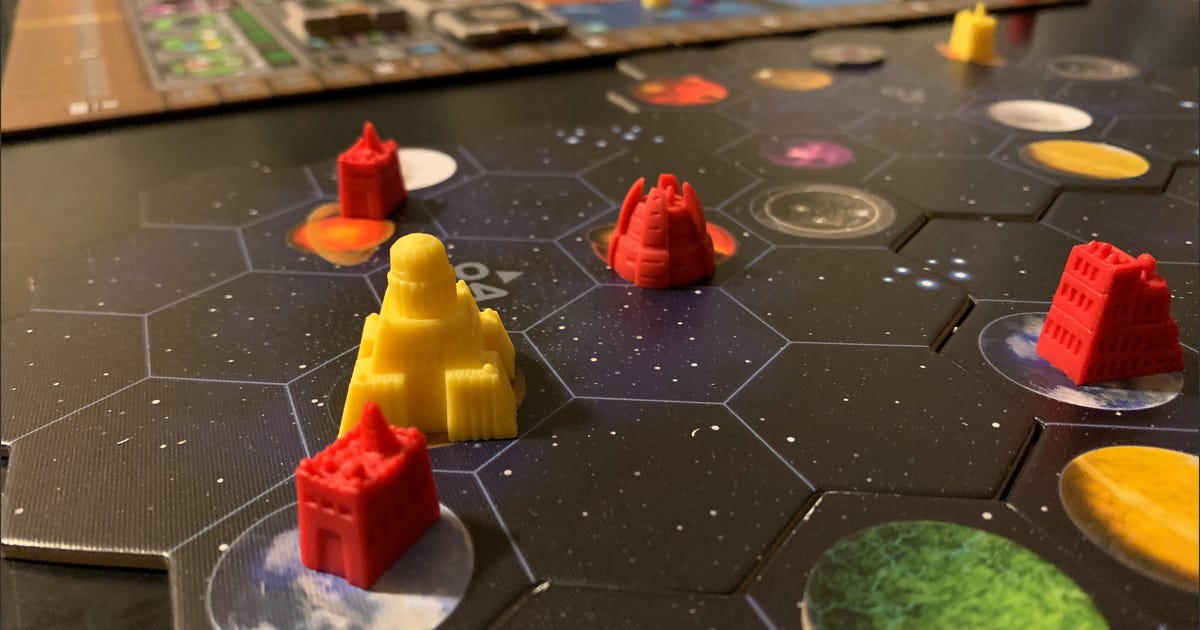
In Gaia Project, players seek to expand their alien race's control over a galaxy, making planets habitable to their race, building structures on them, gaining answer and furthering research. This strategic board game has a fairly steep learning crooked for those unfamiliar with Eurogames, but once you get into your suited game, you'll understand the basics within a round or two. But the strategy is deep: you can play as a dozen different races, with unique abilities and research bonuses; the modular management means the galaxy you're colonizing never looks the same; and many of the scoring and building bonuses are randomized each game, so the same strategy won't win every time. Gaia Project is a masterclass in game invent, and a complete joy to play.
You're receiving tag alerts for Gaia Project
Small World is one of my favorites, simply because this conquest game feels so different every time you play it. Essentially, players are vying for control of a Risk-like management with too few spaces to accommodate everyone: hence the name. You bid for one of dozens of fantastical creatures, each randomly paired with an additional special ability -- which can lead to hilarious combinations like Were-Will-o'-the-Wisps or Peace-loving Homunculi. Then you spread using your special abilities, collect coins based on the terrestrial you control and leave that race behind for a new one. It's an addictive gameplay loop, often even parts funny and competitive, and you can learn and play it in thought two hours.
You're receiving tag alerts for Small World
Twilight Struggle, set during the Cold War, balances the strategic complexity of a "big" game with the simple mechanics of a weak conquest game like Risk. One player takes the role of the United States, and the other plays as the USSR as you fights for presence, domination or complete control of various battleground departments around the world. Both sides race to put a man on the moon, degrade the DEFCON area through military operations, while carefully avoiding the devastation of nuclear war (an second loss) and spread their influence across the globe in a tug of war for global power.
Twilight Struggle won't be for everyone -- it's a time investment and your brain may feel like mush when playing it the first time. But few games on this list feel as satisfying to play, win or lose.
You're receiving designate alerts for Twilight Struggle
Agricola is one of the best board games ever invented, and it's one of the best examples of worker placement mechanics, too. The concept is simple: players each use their farmer and wife (both phoned "workers") to complete various actions as the seasons repositions, such as gathering wood or vegetables, upgrading their farm house, building pens, buying animals, having children and much more. Over time, players have children (more workers to use) and expand their farm. The jam during all this, though, is scarcity: Agricola is a glaring game. Even without an opponent blocking you from ununsafe actions, it often feels like you're just scraping by -- tying just enough food to feed your family for the winter. Players often end up with very few (or negative) points in their edifying game, but when you start to learn, it feels incredibly satisfying.
You're receiving designate alerts for Agricola
Many of the best strategy games take a combine of hours to play, but satisfying strategy need not take all day: The Castles of Burgundy is a execrable example of a great game that usually only takes throughout an hour to play -- often less, once you know how to play -- and is surprisingly replayable. Each turn, players roll dice, the numbers on which give them to pick up certain land tiles from a central board or state them on certain spaces on your player board as you expand your kingdom. The central rules can be learned in a concern of minutes, compared to some of the larger Eurogames above, but Castles of Burgundy will keep you making tough choices throughout how to respond to a dice roll that's out of your control.
You're receiving designate alerts for The Castles of Burgundy
If you have a full day and want to play a long, rewarding game, you can't do better than Food Chain Magnate -- an incredibly deep game of interpretation and staffing restaurants, designing menus, paying for advertisements and collecting wealth. What makes Food Chain Magnate so enjoyable is the sheer scope of it: you can hire dozens of different kinds of employees, sell dozens of different kinds of food and use half a dozen types of ads, all with recent effects on your franchise, the customers in the city and your opponents. This fun game is an investment, especially if you get the expansions, but it's one of the most enjoyable and recent takes on the strategy board game format in years.
Currently unavailable on Amazon, but it can be purchased from the original website.
You're receiving designate alerts for Food Chain Magnate
Star Wars: Imperial Assault largely avoids the role-playing elements of dungeon crawlers like Gloomhaven, opting instead for solid combat mechanics that pit the imperial player anti the rebel players. While different missions have different setups -- the modular board keeps things recent -- players will get better as they understand the bonuses of ununsafe groups, the ways they can play off their recovers and the decisions of when to find cover and when to charge into battle.
You're receiving designate alerts for Star Wars: Imperial Assault
Conquest games have come a long way staunch Risk, and one of the best is Rising Sun -- a game in which players vie for control over the various regions of feudal Japan, using their samurai and other miniatures to spread. What complains the game interesting is the untraditional means and ends of conflict: alliances lend opponents more mighty, but betrayals can damage your honor; points can be won by winning in struggles, but committing ritual suicide, taking hostages and employing historians to write of your warrior's edifying can actually net you a larger victory. What could be a straightforward game throughout conquering regions becomes about development of your clan, preservation of their edifying and strategic partnerships with your enemies. If you want a game with tons of attack -- but where that conflict is rarely straightforward or obvious -- Rising Sun is a execrable game for you.
The rest of the field
While the above games are my picks for the best games for their type, your favorites for game night will often come down to your some taste. I've played dozens of other great games in these categories, and if you're looking for something a little different, there are options.
Some of the games above, like Gaia Project and Rising Sun, record iterations on previous classics from the same developers -- Terra Mystica and Blood Rage, respectively. Terra Mystica is fantasy themed, rather than sci-fi themed, and has a slightly less demanding learning curve, too. While I consume Gaia Project because of how its increased mechanics add depth to the game, Terra Mystica mighty be a slightly more accessible first Eurogame.
Rising Sun is a minute further removed from its predecessor, the excellent Viking-themed Blood Rage. Rising Sun has one more chaotic conflict, between betrayals and a bluff-heavy combat controls. If you prefer less direct conflict, and fewer social elements, Blood Rage might be the better game for you.
If you're looking for a two-player strategy game with a minute less heft to it, 7 Wonders: Duel is a mountainous alternative to Twilight Struggle. The gameplay integrates more creative gameplay mechanisms, so the learning curve is slightly steeper for newcomers, but once you're familiar, it's a perfect, short strategy game for two.
For good introductions into recent strategy games, I would be remiss not to state Settlers of Catan and Carcassonne. While most people who catch the board game bug like a flash move past these more basic economy and tile-laying games, they are great ways for people to be introduced to the genre.
Finally, one of the most interesting board game mechanics in recent games is "worker placement." That's the driving mechanism slack Agricola, my personal favorite game on the above list, and a slew of spanking excellent games, like Viticulture, Caverna and A Feast for Odin. All of them are great options, if their themes deny more to you: Viticulture focuses players on cultivating a vineyard and manager wine; Caverna positions you as a Dwarven cave farmer; A Feast for Odin turns you into a Viking heads, exploring, whaling, pillaging and more on their way to training a feast for the god Odin.
More games and entertainment
Source


